A new destination for Horizon.
The combat arena has been retired from the playable project. Horizon now has a solo, fictional 16 km point-to-point road journey: forest bends, an open ridge, coastal roads and a city-edge destination. Civilian traffic travels in both directions. The separate real-data Nordschleife garage/track mode is preserved.
There are no rival teams, weapons, combat damage or combat respawns. The challenge is keeping your car healthy, building it up and reaching the destination. This first version has no time-limit failure.
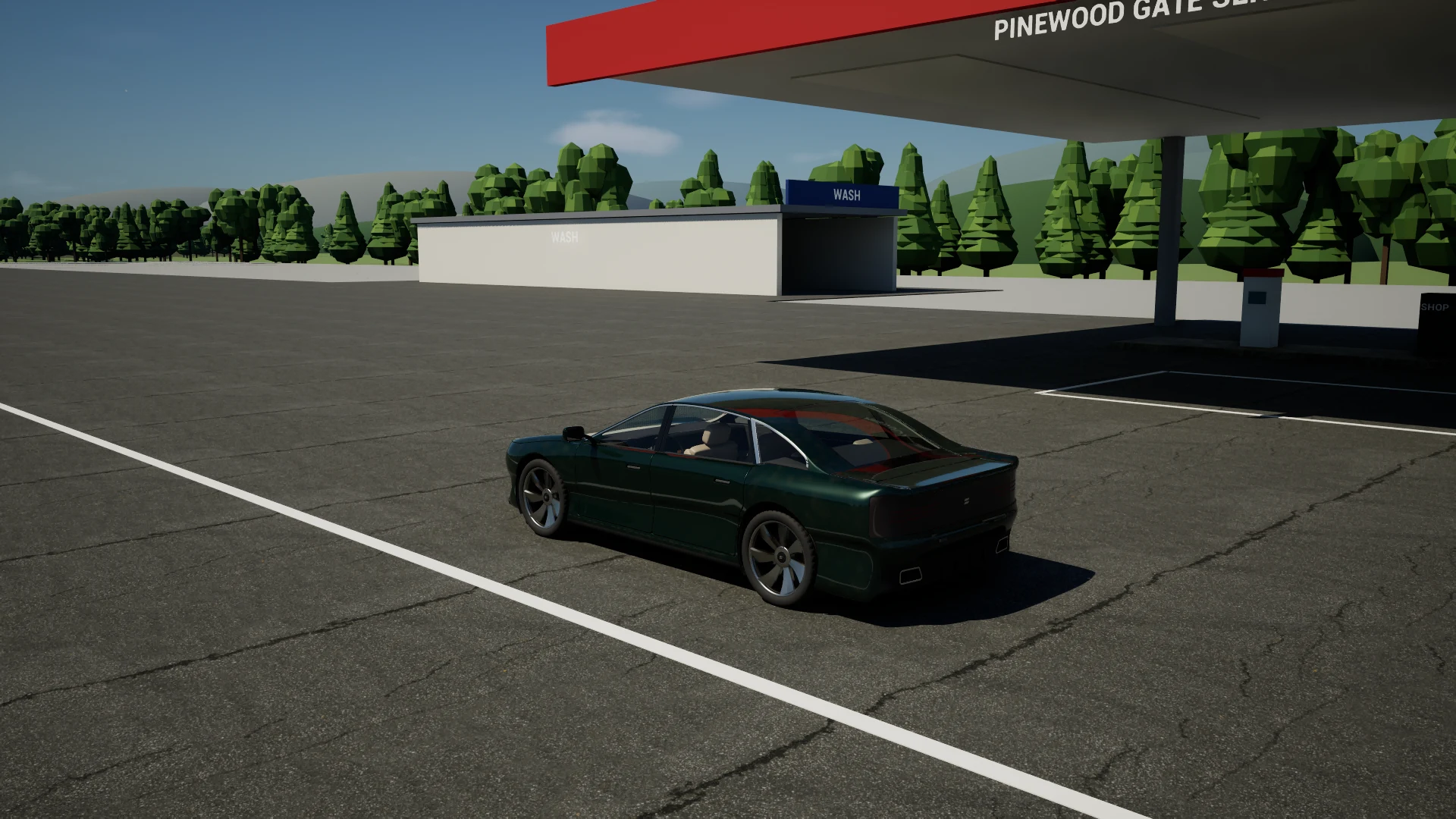
Fuel first. Then make it your road.
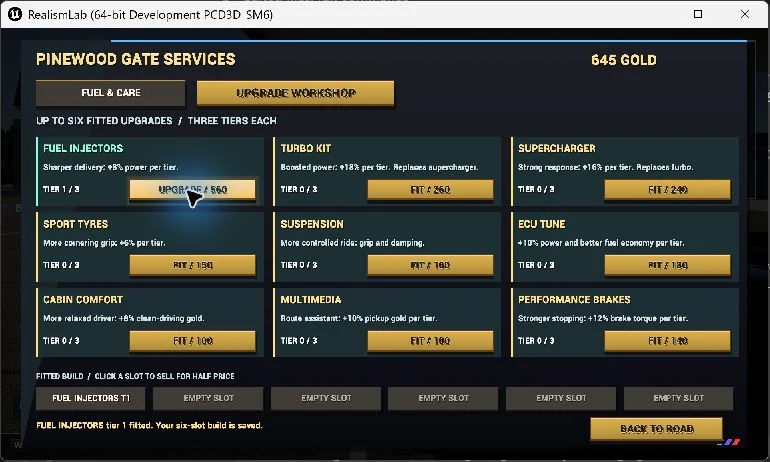
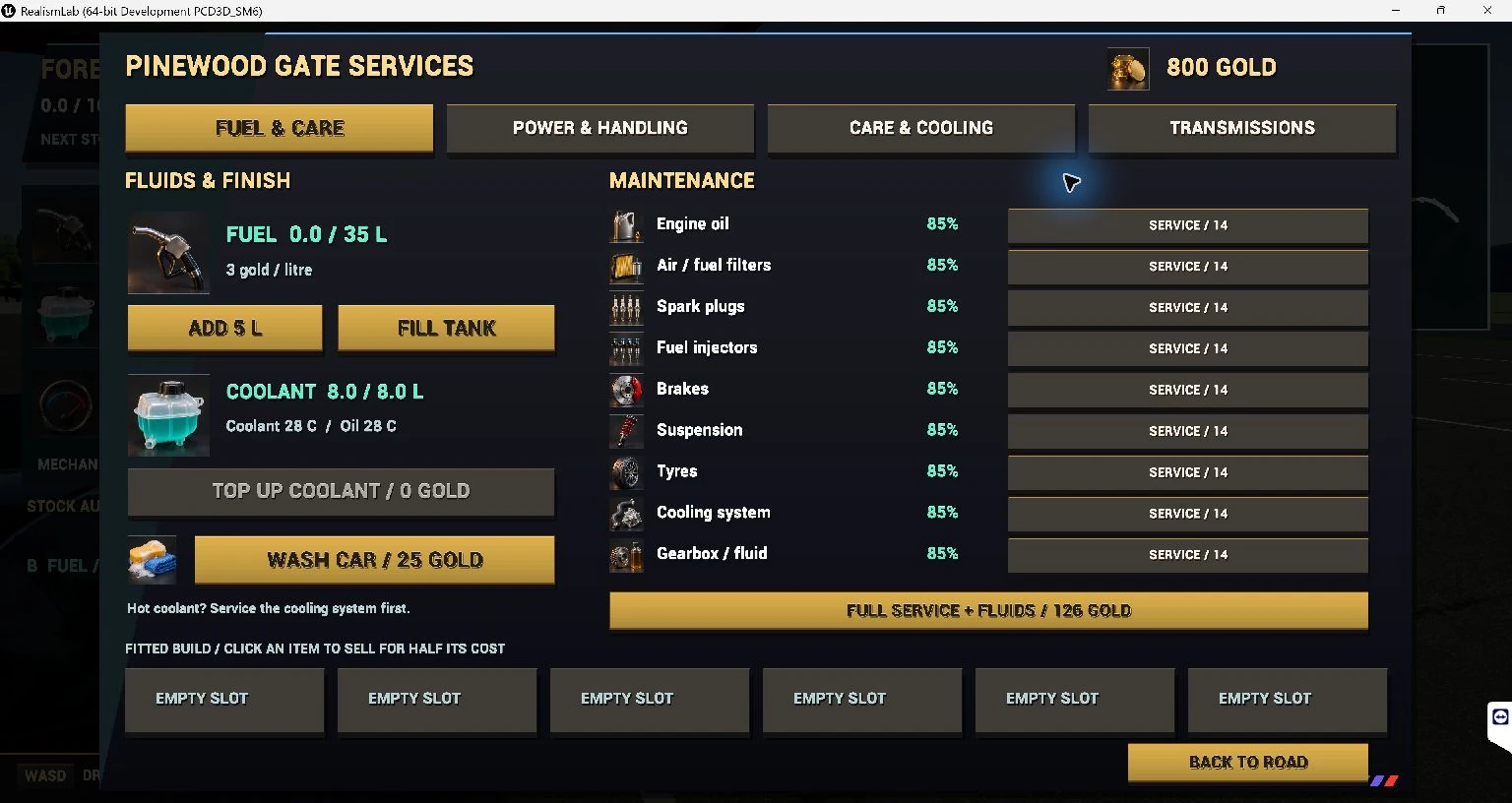
Your first outing starts on foot with 800 gold and an empty 35-litre tank. Press B at the service counter to buy fuel before entering the car with F. Five connected stops offer refueling, washing, maintenance and upgrades. Fuel usage responds to distance, load, equipment and driver choice. An empty tank cuts engine power while leaving steering and braking available.
Oil, filters, spark plugs, injectors, brakes, suspension and tyres have separate conditions. Servicing restores them and their effects on power, grip and stopping. Dust accumulates on the body and can be washed away. Wear is accelerated for gameplay; these are not real-world service intervals.
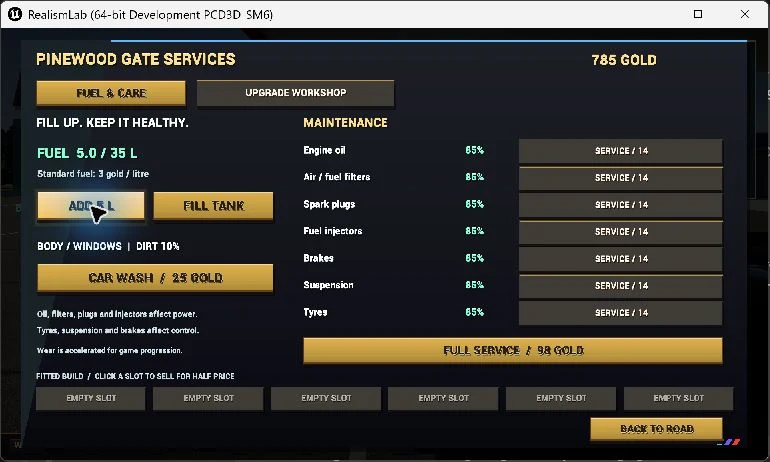
Six slots. Three tiers. Your build.
Fit up to six upgrades from nine categories: injectors, turbo, supercharger, tyres, suspension, ECU, cabin comfort, multimedia and brakes. Each has three tiers. Upgrade an existing item in place, or sell it for half its accumulated cost. Turbo and supercharger are alternative builds. Cabin and multimedia currently provide progression bonuses, rather than newly modeled physical interior swaps.
Earn gold through forward travel, checkpoints, arrival and roadside tokens. Fuel and parts pickups provide extra supplies. Driver passives make service, economy, rewards or engine response a little different. Your bank and each car’s fuel, conditions, dirt and fitted build are saved locally; each new outing begins at the first stop rather than resuming a mid-route position.
A driver who notices the car.
Twenty-eight new synthetic reaction clips cover low fuel, an empty tank, refueling, servicing, washing, arrival and feeling an upgrade under acceleration. Four distinct stock Kokoro-82M voices were generated locally on SIMPLE-PC. The existing driver/car soundtracks, unique instruments, four cameras, drift assistance, exhaust and sunny atmosphere remain in place.
What passed, and what still needs work.
All four car/driver profiles passed 30 native journey checks each. Separate garage camera/settings checks passed all 80 cases. Checks include 960 actual lane-surface samples, all five parking pads, moving traffic, normal door entry, empty-tank behavior, actual fueled Chaos driving, imported voice playback, upgrades, save-data roundtrip and roadside assistance. Economy and finish fixtures are separate from the physical driving checks. Fuel and upgrade purchases were also verified through the visible menus.
The environment remains visibly a prototype. Traffic uses kinematic hulls, so collisions are not yet a polished, pushable traffic simulation. A full human drive through the route, edge cases and economy balancing remain playtesting work. This is a local Unreal development build, not a new Steam/Epic release or public game download.
Codex integrated the gameplay, UI, persistence, audio and tests. Claude Code built the isolated route/traffic foundation, and the A6000 worker generated the new voices. The earlier arena checkpoint remains an archive of the previous direction. Listen to the existing soundtrack collection or browse the released asset previews.
A proper start to the journey.
The game now opens with new AI-generated Auvren road-trip artwork, a gently moving camera, an animated route marker and loading indicator, and rotating driving tips. The same screen covers map travel into the journey or back to the garage. It runs through Unreal’s Slate/MoviePlayer loading system while the game thread is busy, then hands over automatically. The indicator does not pretend to measure a loading percentage.
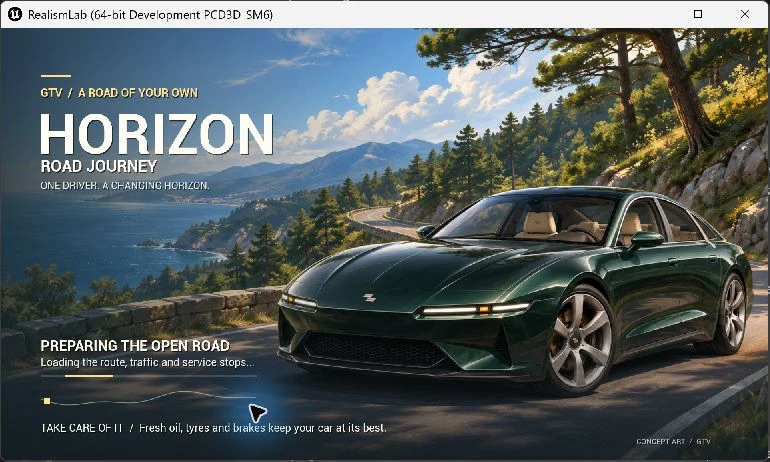
The final loading-screen build passed a startup and map-travel review, plus an ordinary startup with the extended test delay removed. The exact art prompt and source image are retained with the project.
AWD where it belongs. Wheelspin when you ask for it.
Both Valen R10 cars now have a verified 40% front / 60% rear all-wheel-drive split. Auvren V10 and V8 Executive remain rear-wheel drive. This was checked through actual Chaos wheel torque, rather than a HUD label.
When stopped, hold W+S or W+Space for an assisted brake-stand: the front brakes hold while rear service braking releases and rear traction reduces. AWD keeps driving both axles. Release the brake to launch. Normal grip, traction control, ABS, automatic shifting and upgraded brake strength return. Space remains the handbrake at speed.
Smoke and tyre audio respond to actual wheel/contact slip, including when the car is nearly stationary. Fuel is required. This is an arcade brake-stand assist, not a claim of a fully detailed real-world differential simulation.
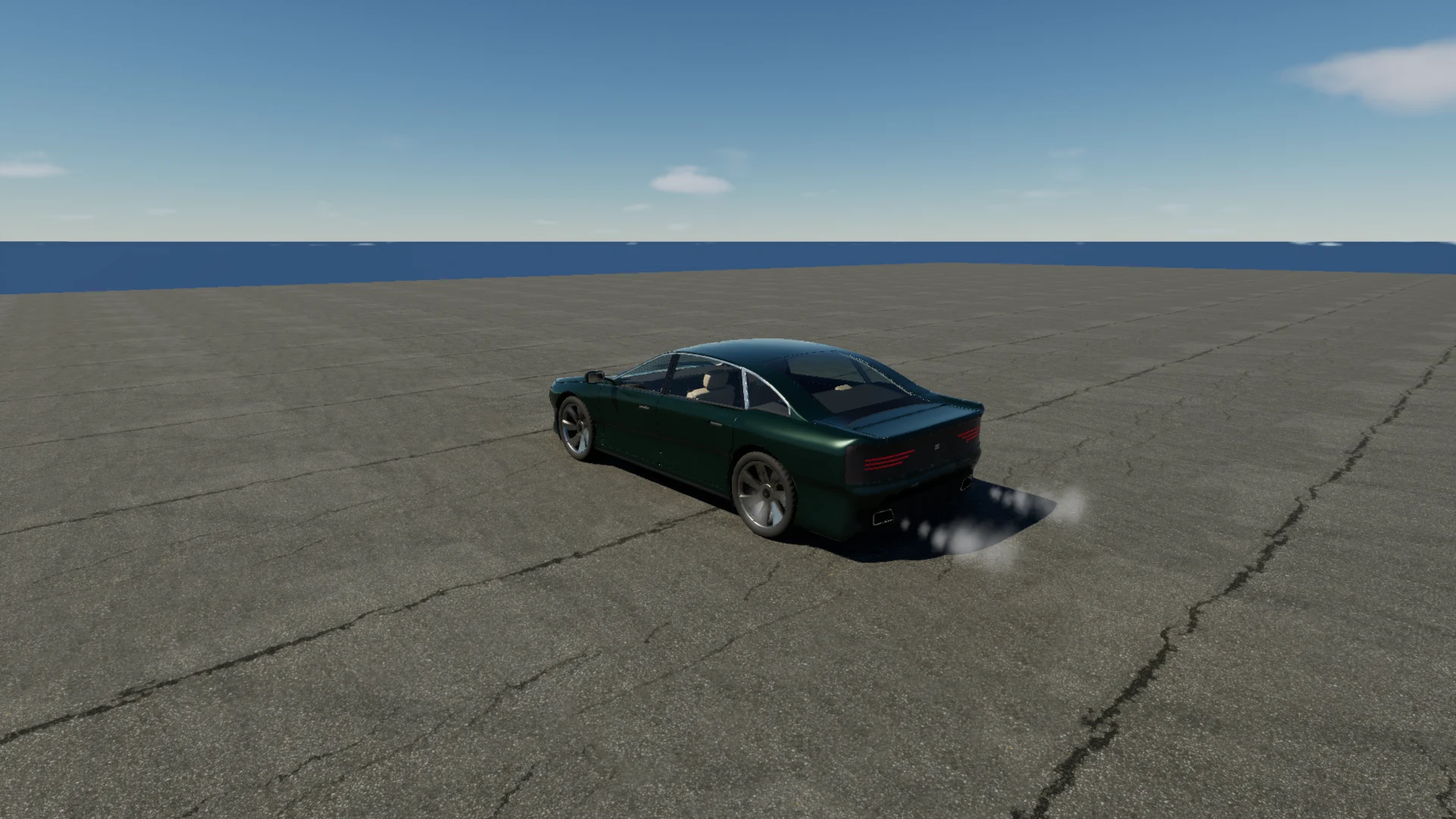
All four cars passed 64 native drivetrain/burnout checks. The AWD Touring also passed 30 Road Journey checks covering fuel, upgrades and driving. The tests verify scripted inputs and physical telemetry; human driving and listening feedback remain useful.
Coolant, heat and a workshop you can see
The Road Journey prototype now tracks coolant quantity, coolant temperature, oil temperature, cooling-system condition and gearbox condition for each car. Neglected cooling systems can leak; excessive heat reduces power and can trigger a protective engine cutout. Stopping allows the engine to cool, including time spent with the game closed. These are accelerated game systems.
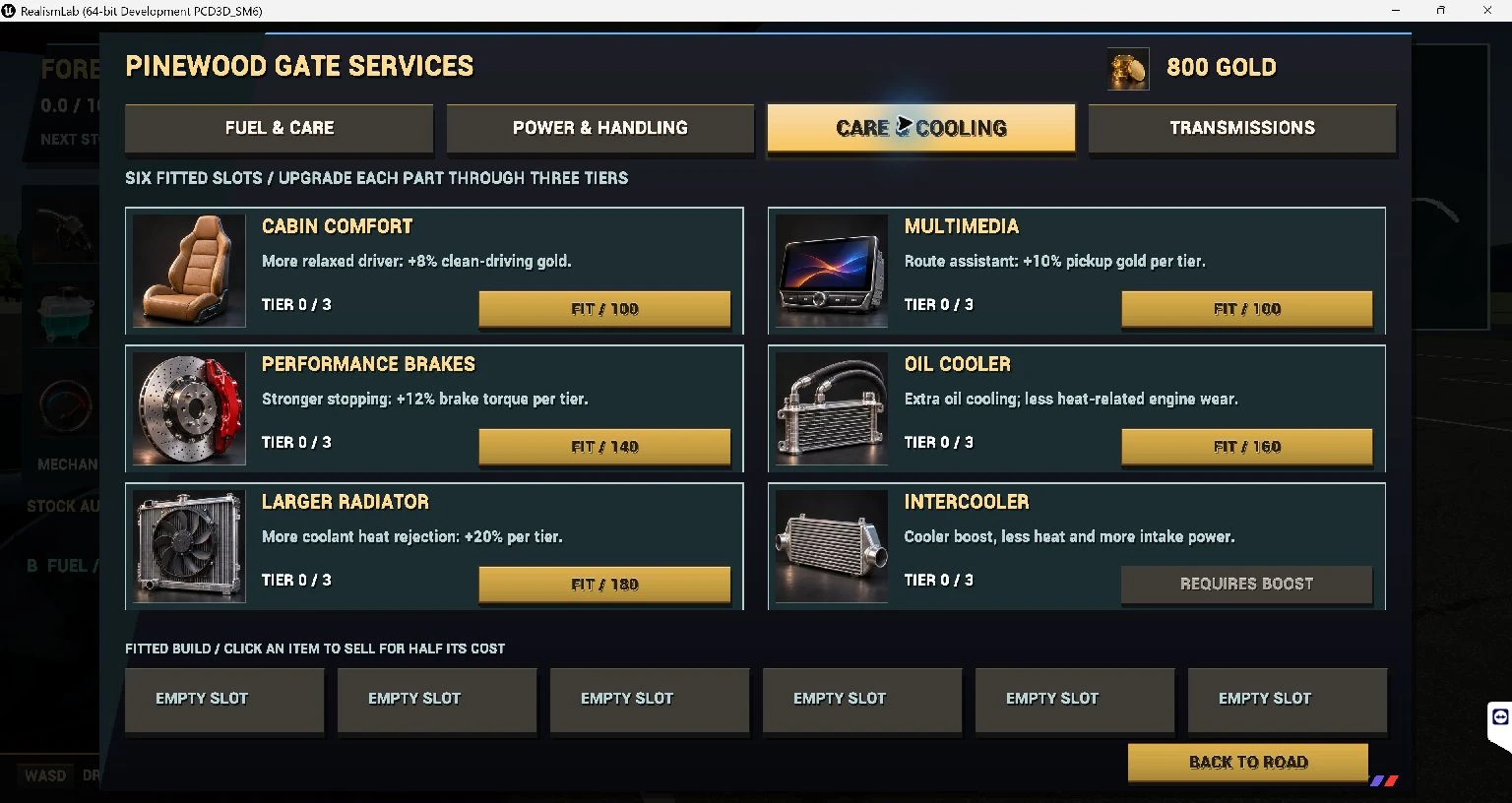
Oil coolers, larger radiators and intercoolers now have three upgrade tiers. The intercooler requires a turbo or supercharger. Cooling repair, coolant top-up and gearbox servicing are available at service stops. A hot system must be serviced before topping it up.
Choose your transmission
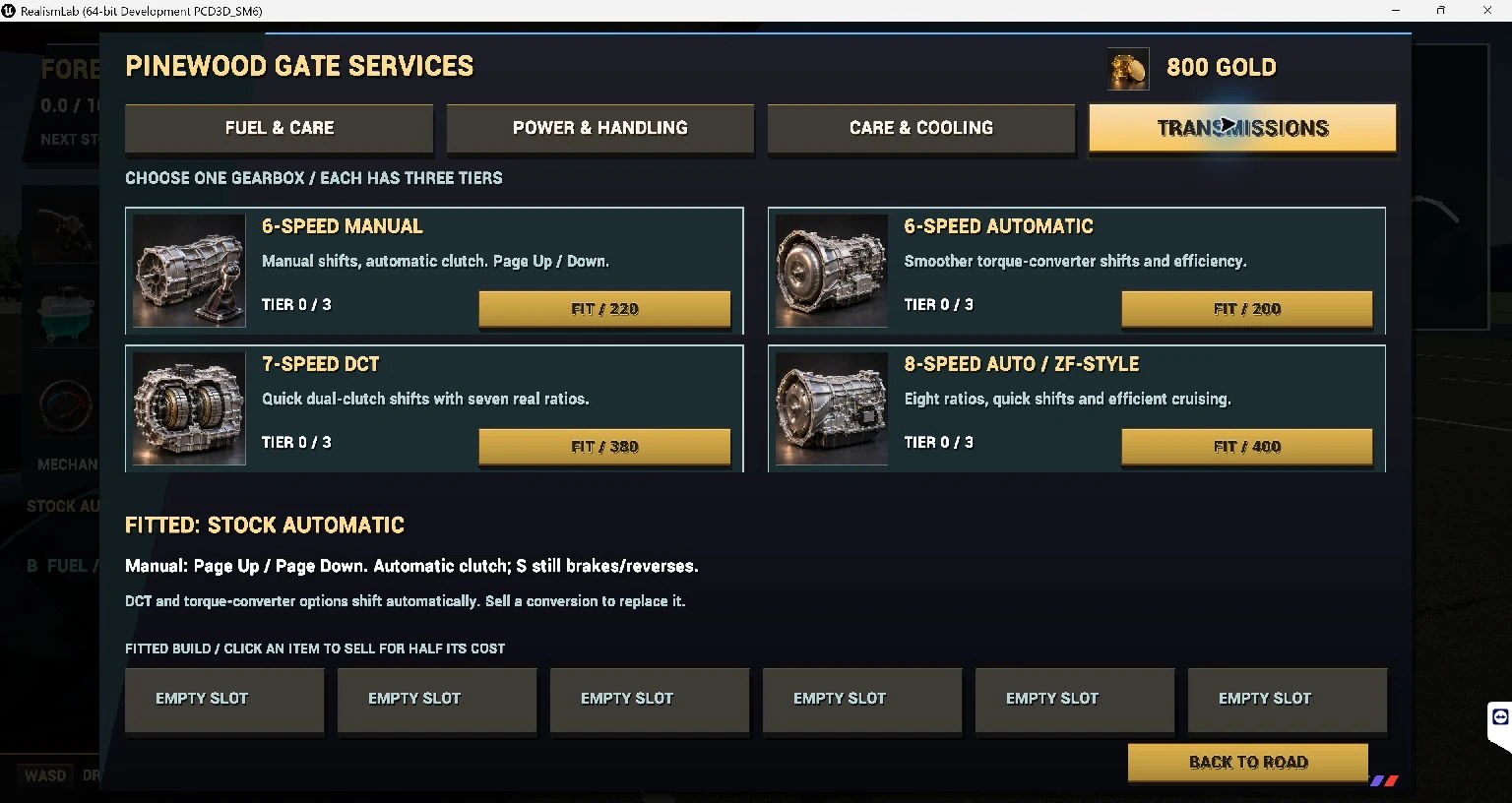
Four conversion choices change actual driving behavior: six-speed manual, six-speed automatic, seven-speed DCT and eight-speed automatic (ZF-style). Only one gearbox conversion fits at a time. Manual shifting uses Page Up and Page Down with an automatic clutch. These are gameplay configurations rather than licensed manufacturer simulations; interior selector meshes are unchanged.
Photographic parts, readable status
Two generated image atlases supply 32 physical-looking parts and service icons. All sixteen upgrade types, fitted equipment, maintenance rows, fuel and cooling status use the new artwork. Four shop tabs keep the larger catalogue readable, while the original six-slot build limit remains.
Eight new driver voice clips react to low coolant and overheating. Existing fuel, bank and equipment saves are preserved through the new cooling save format. The separate Garage Track remains available.
Validation: 31 new cooling, save and transmission checks passed, plus the existing 30-check journey regression on an AWD car. Checks include actual Unreal gear changes, powered motion and protective cutout; thermal and economy fixtures are injected tests. All four shop pages and purchases were also checked in the visible game. No player progress was overwritten. A first visible launch hit a graphics-thread startup crash; the subsequent launch and shop review completed. Long journeys, traffic edge cases and balance still need playtesting.