A house where everything works.
Hollowmere’s main mode is now Ravensgate Hall: the empty lakeside house of a Victorian clockmaker, which Nora explores room by room. Since 13 November we have been changing what the house is made of. Instead of props you can only look at, its rooms are filled with attractions that actually work. Each one is a detailed model whose parts really move, and you see it happen on screen instead of reading about it.
This post goes through what works so far, room by room. Every picture is a capture from the game in Unreal Engine 5.8.
Pianos you can play.
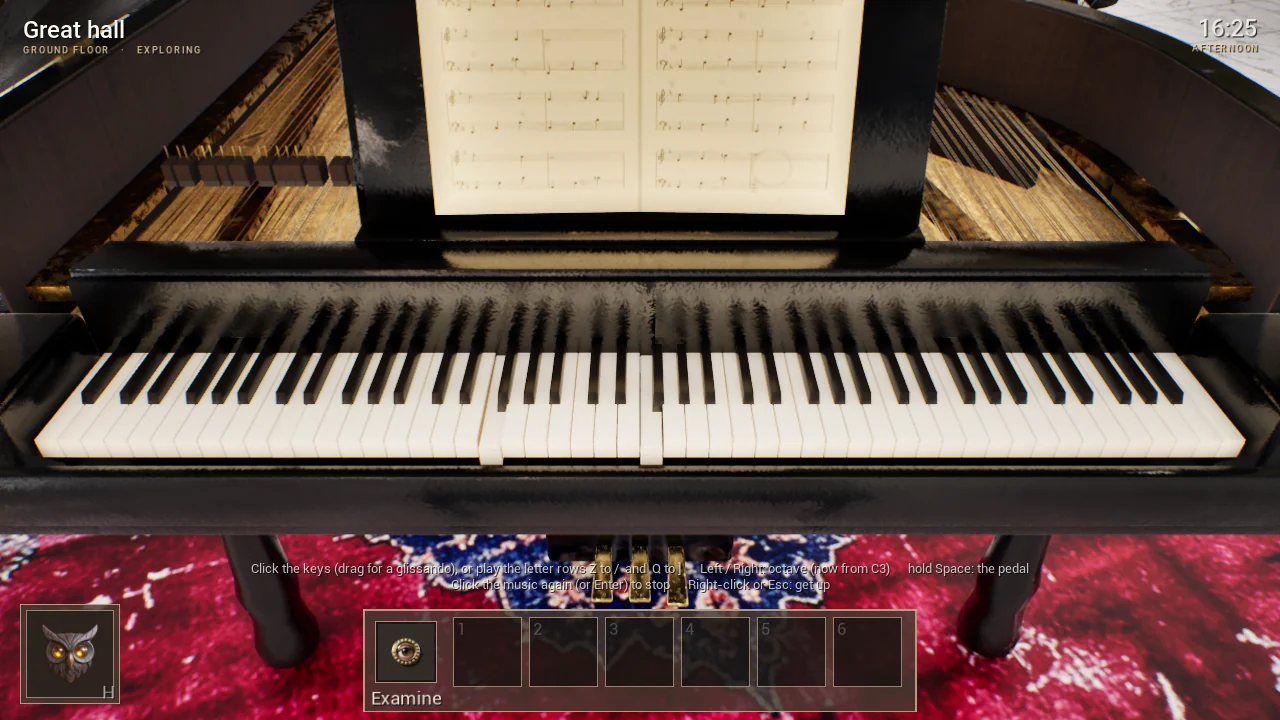
The grand piano in the great hall has all 88 keys, and every key has its own hammer and damper. Sit down and click the keys (drag for a glissando) or play the two letter rows of your computer keyboard; the arrow keys change octave and holding Space holds the sustain pedal. The grand uses the Salamander Grand Piano samples by Alexander Holm (CC-BY 3.0).
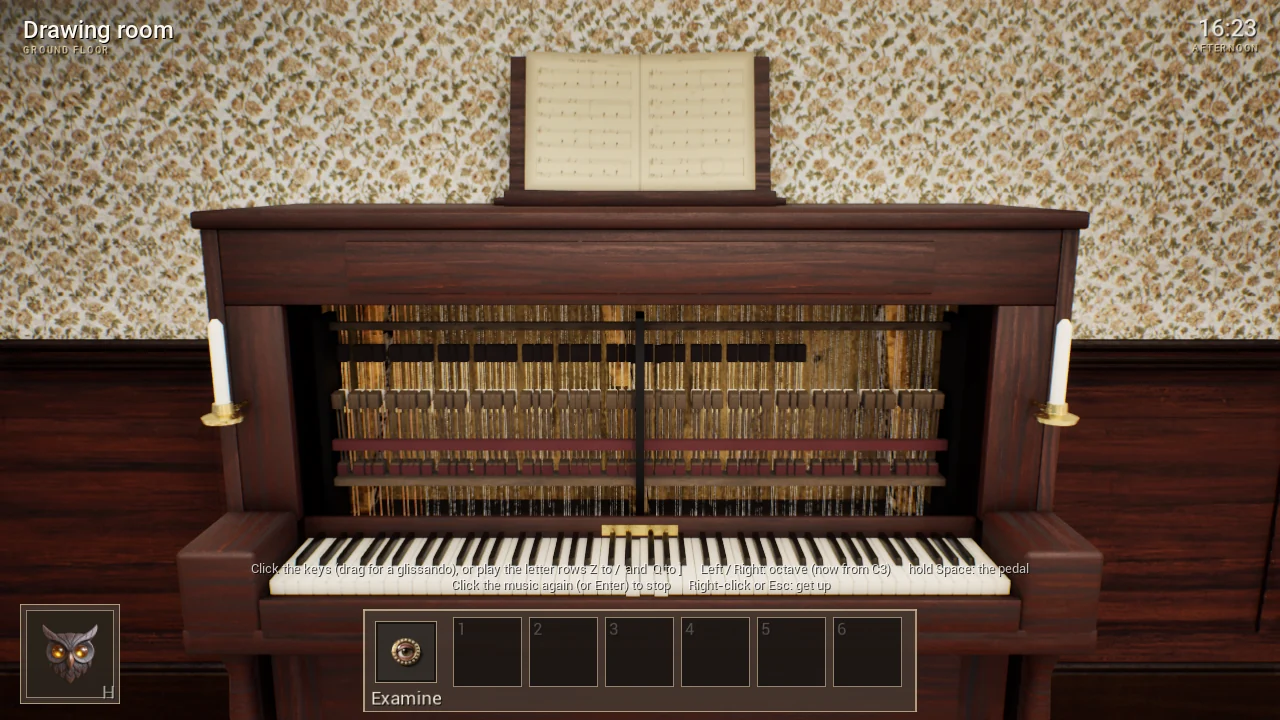
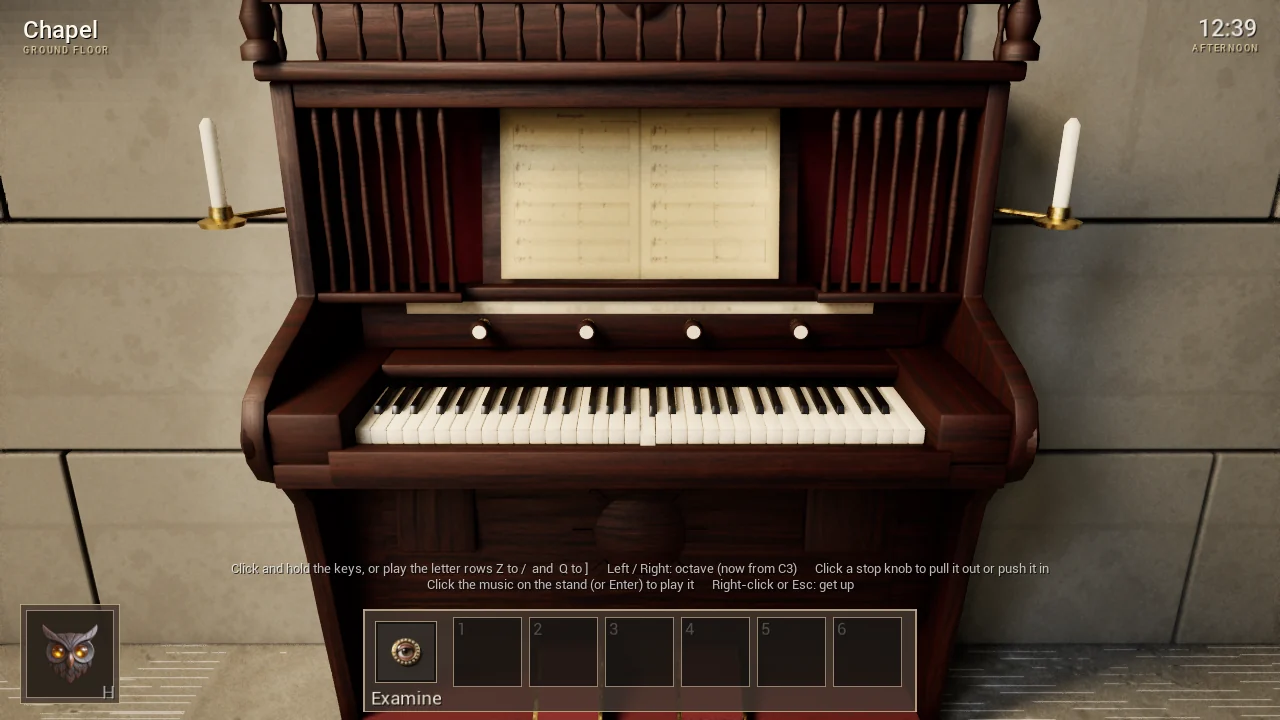
The upright in the drawing room has its front board off, so you can watch the hammers swing and the dampers lift as you play. In the chapel, a reed organ needs its two treadles pumped for wind. Its four stop knobs pull out and change the sound.
Clocks that keep the game’s time.
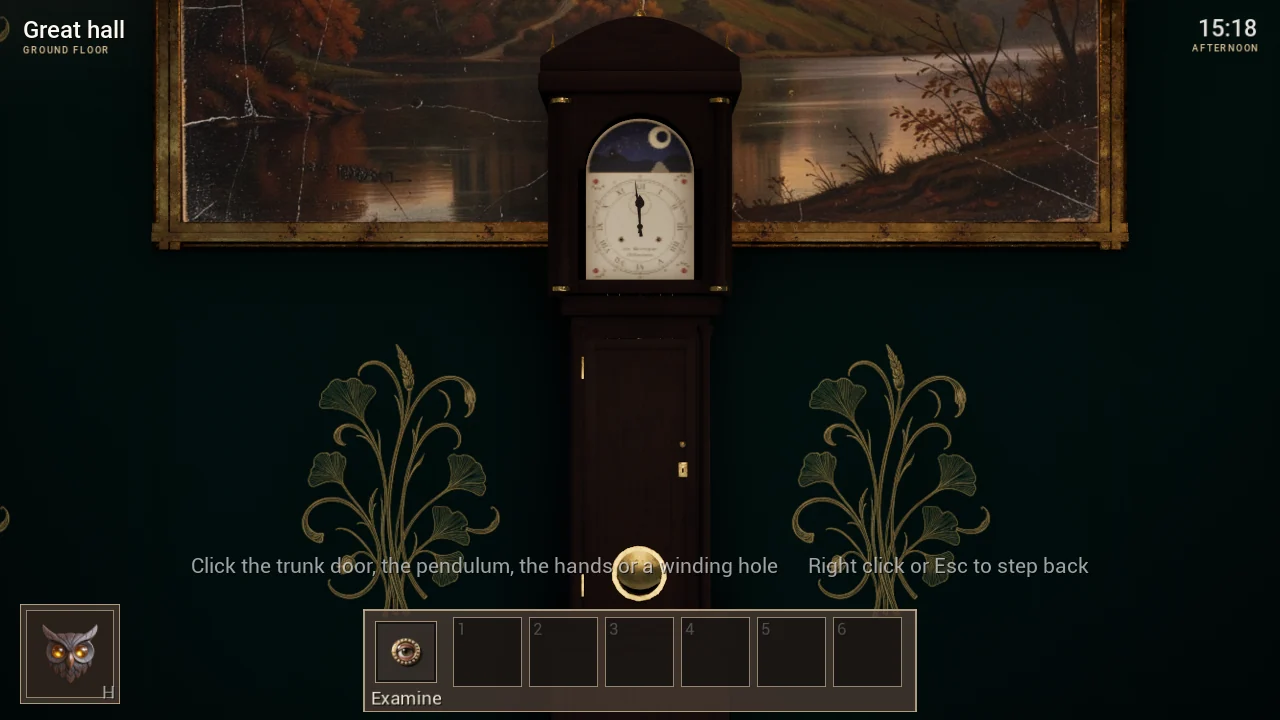
Every clock in the house now runs on the game’s own clock, where one real minute is one hour: the long-case clocks in the dining room and the study strike the hours, and the regulators in the kitchen and the study tick on the wall. Only the great clock in the hall has stopped, and finding out why is part of the story.
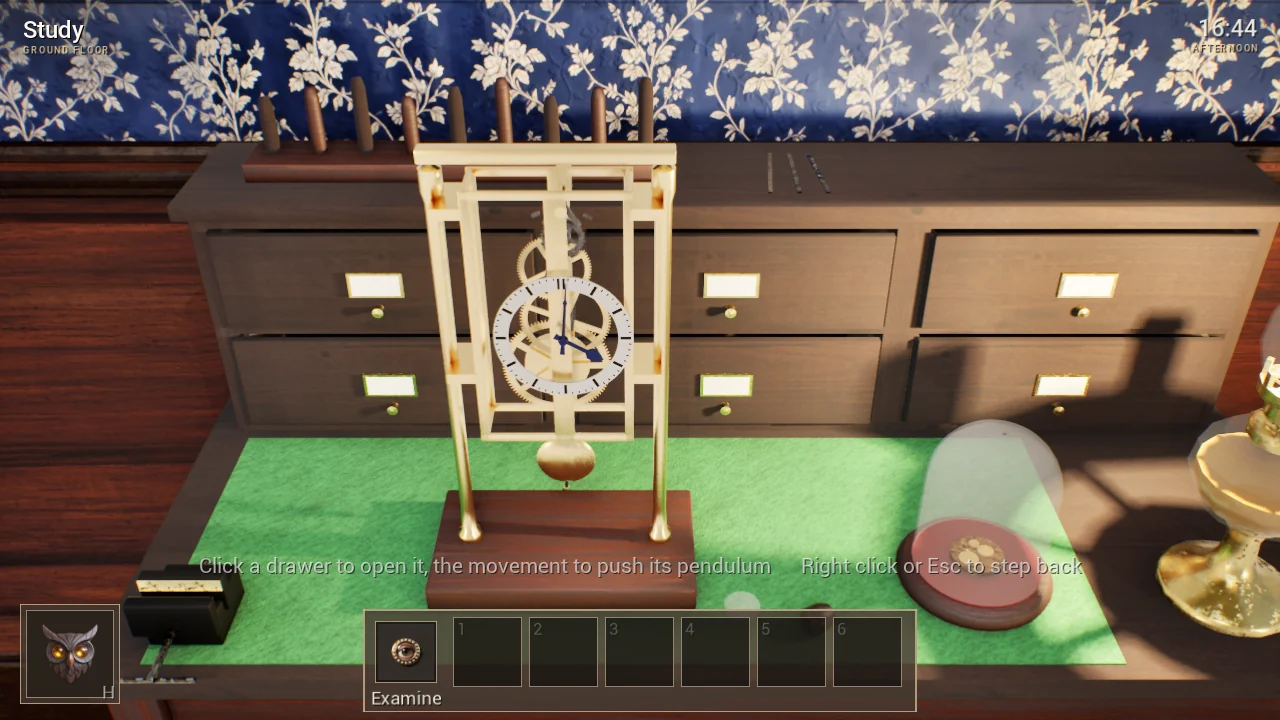
On the clockmaker’s bench in the study, a skeleton movement sits on a test stand with its great, centre, third and escape wheels in view. The movement runs, its wheels turning at their real ratios, and the bench’s six drawers open on springs, spare hands, wheels and a lady’s gold watch.
Room by room.
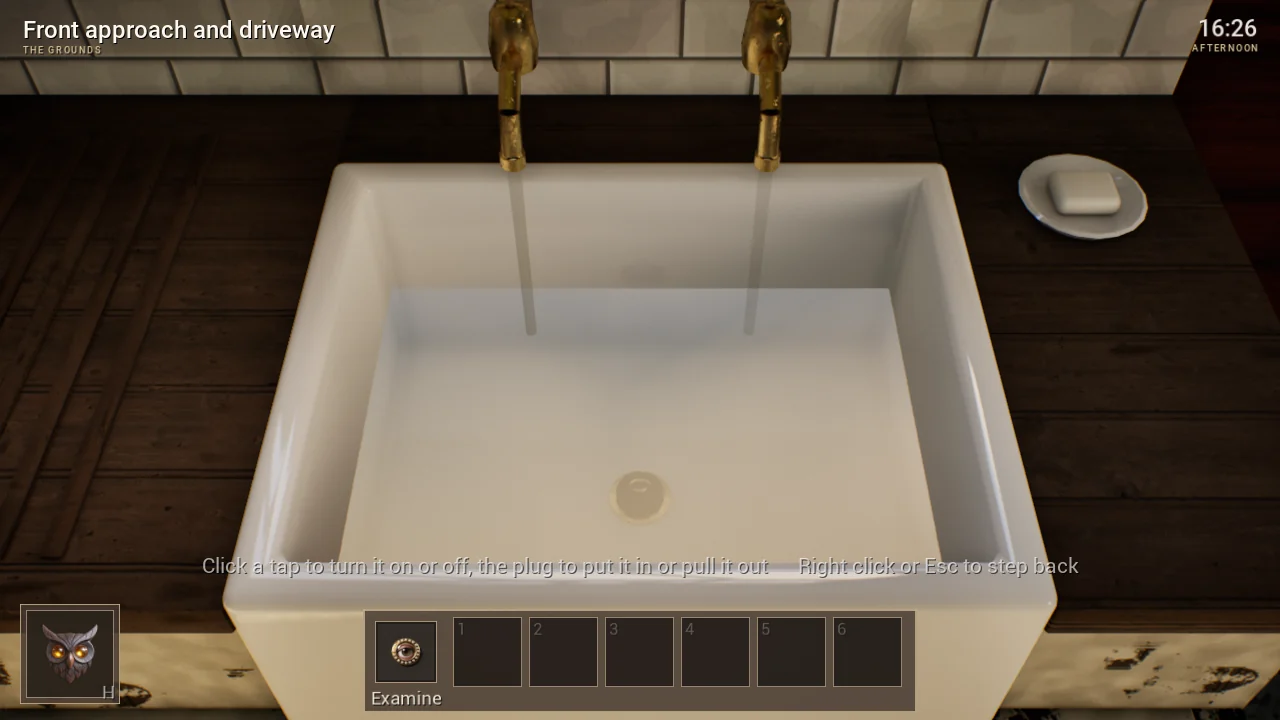
- Kitchen: the taps turn and run (brown at first, then clear) and the plug fills the basin. The range has oven and fire doors that open and a kettle that steams. The dresser’s drawers and cupboards open.
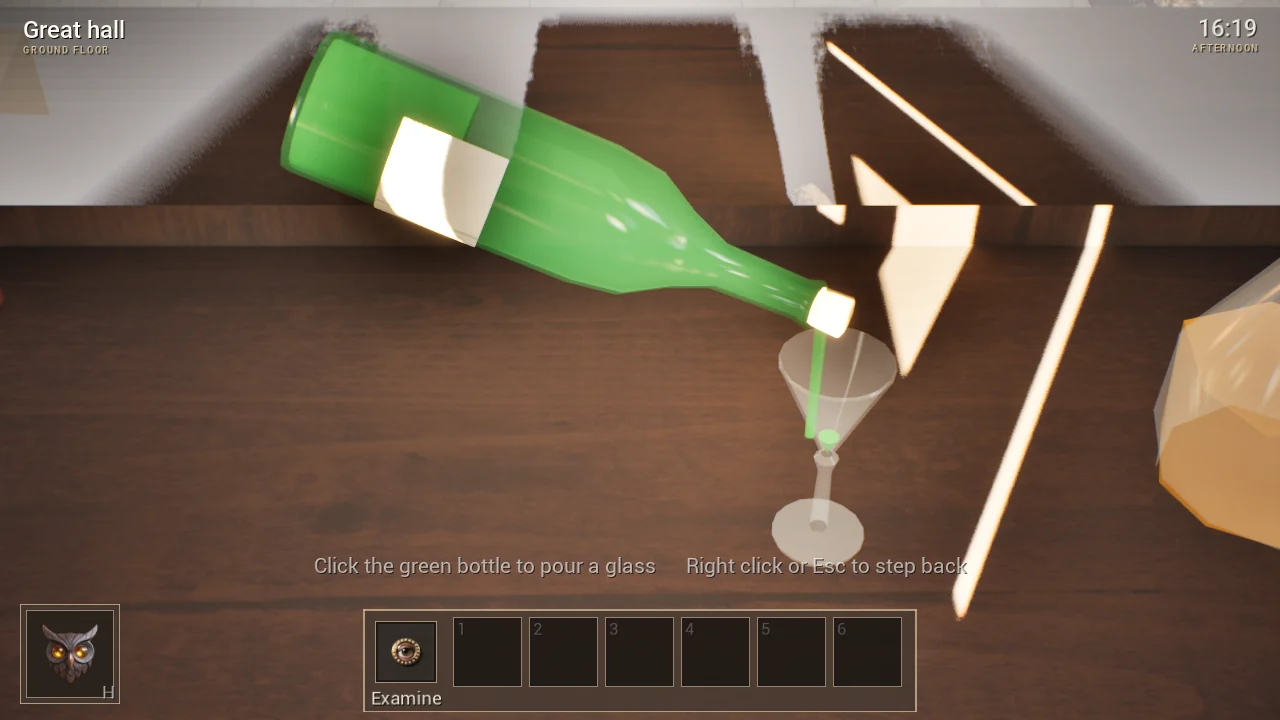
- Great hall bar: tip the bottle and the glass fills.
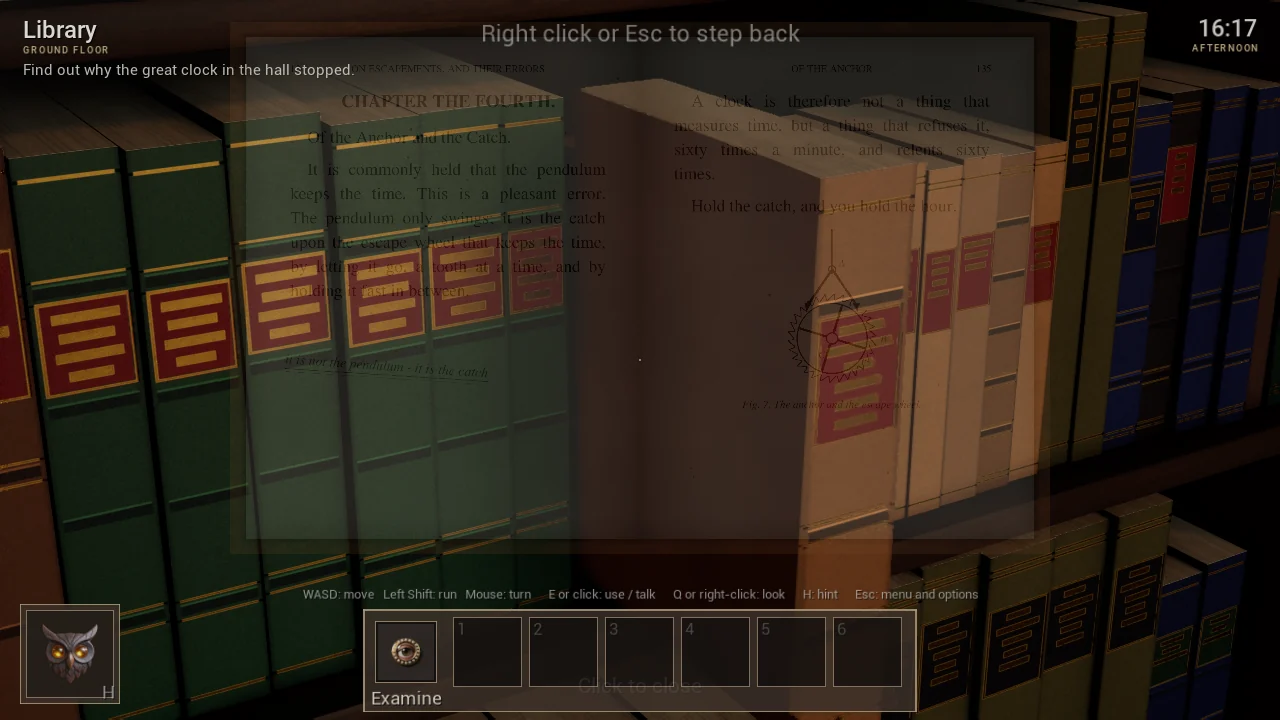
- Library: six books slide out of the shelves and can be read page by page. A ladder rolls along a brass rail to reach the top shelf, and the lamps switch on with their pull chains.
- Study: the writing desk’s drawers open on what is still inside them, and the oil lamps turn up with their wick knobs.
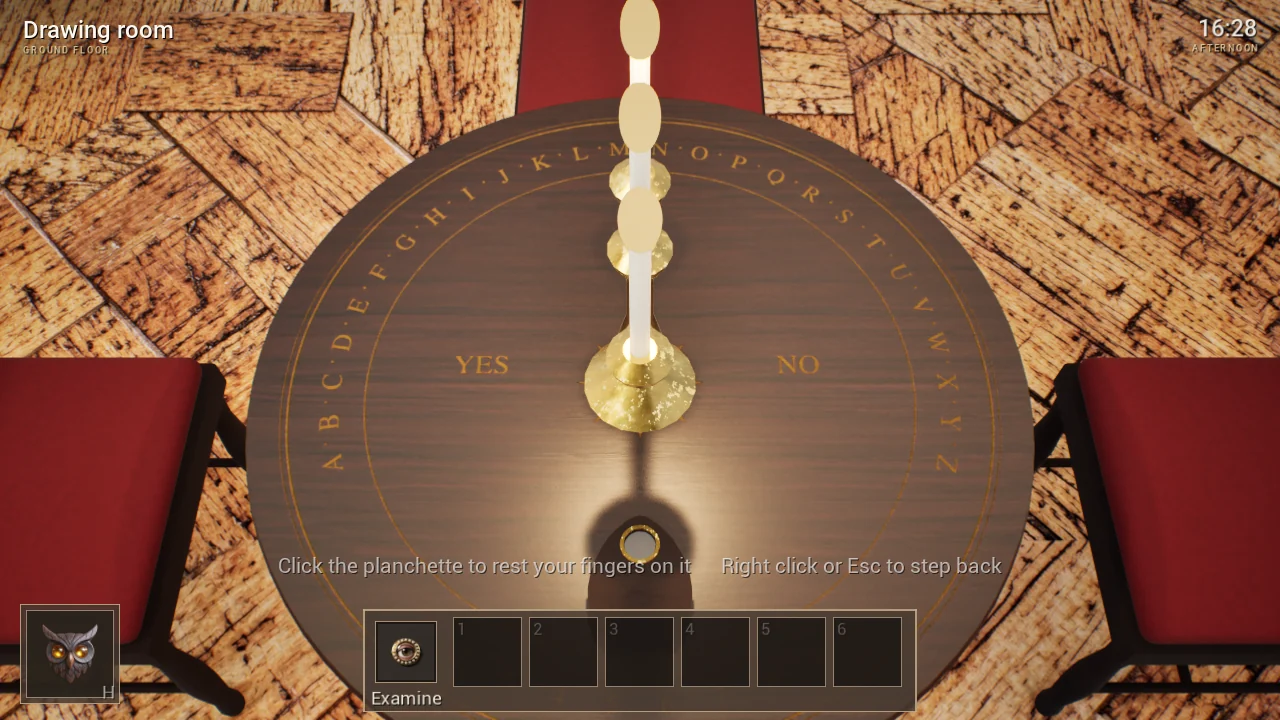
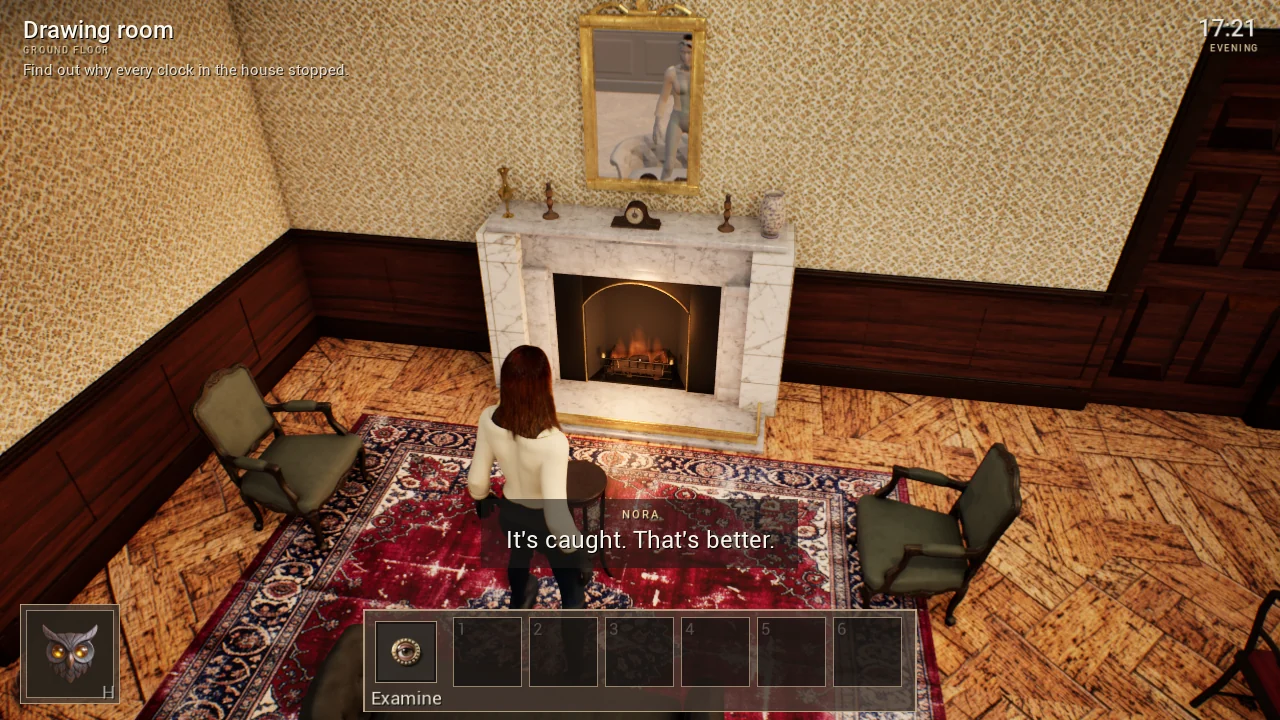
- Drawing room: a séance table whose planchette moves under your fingers and spells out words, and a fire that catches and burns down to embers.
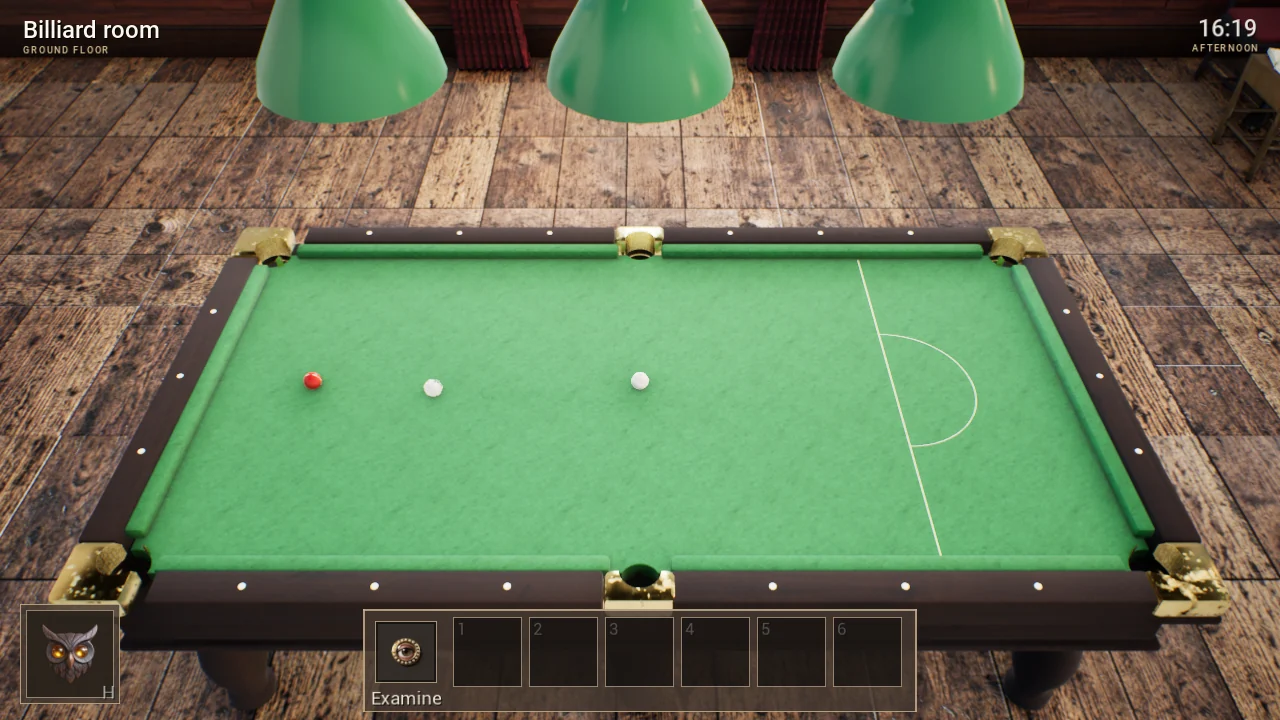
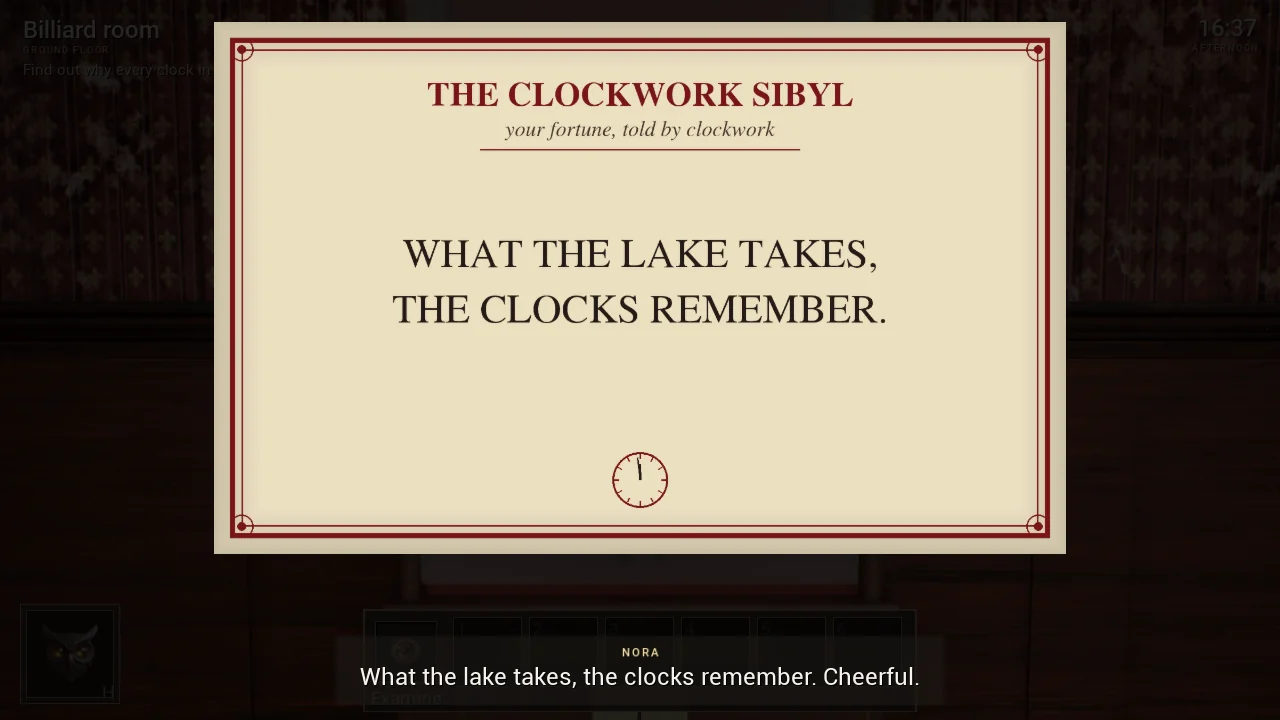
- Billiard room: a game of English billiards on a table with real cut pockets, and the Clockwork Sibyl, a coin-operated fortune teller who turns her head and drops a printed card.
- Dining room: candles you can snuff and light, and chairs that pull out when you sit at the table.
The chapel and the crypt.
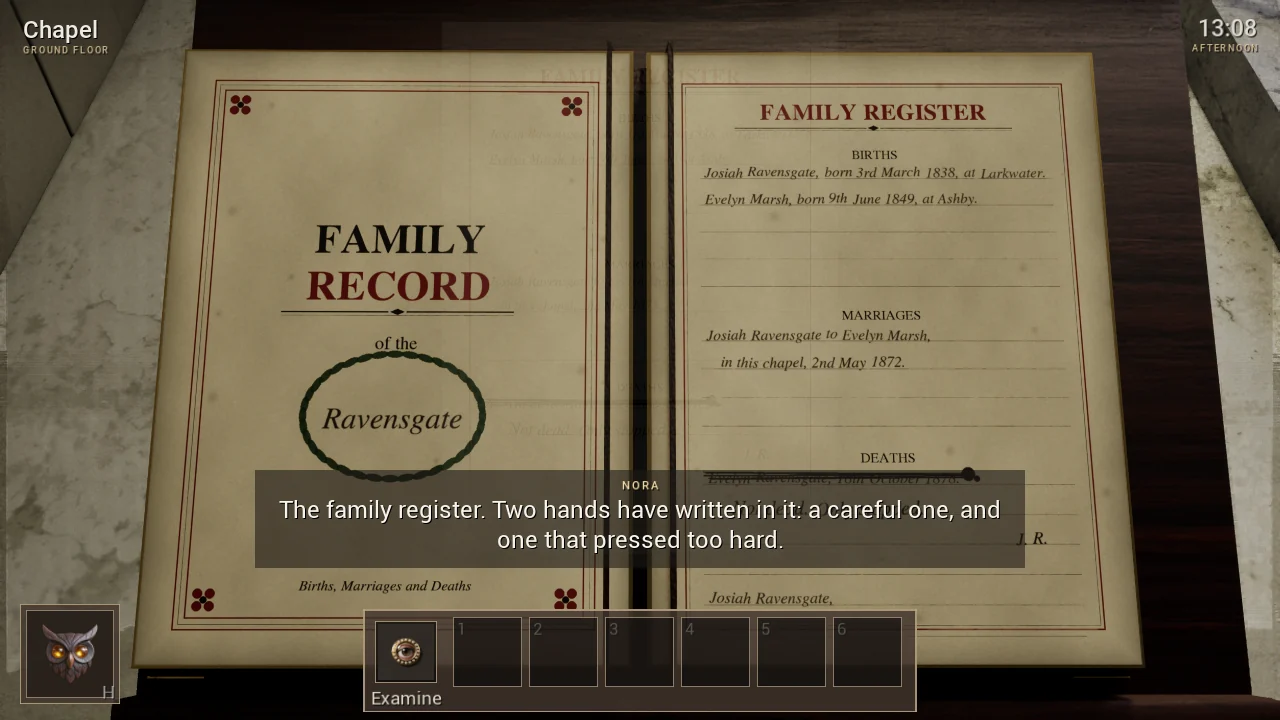
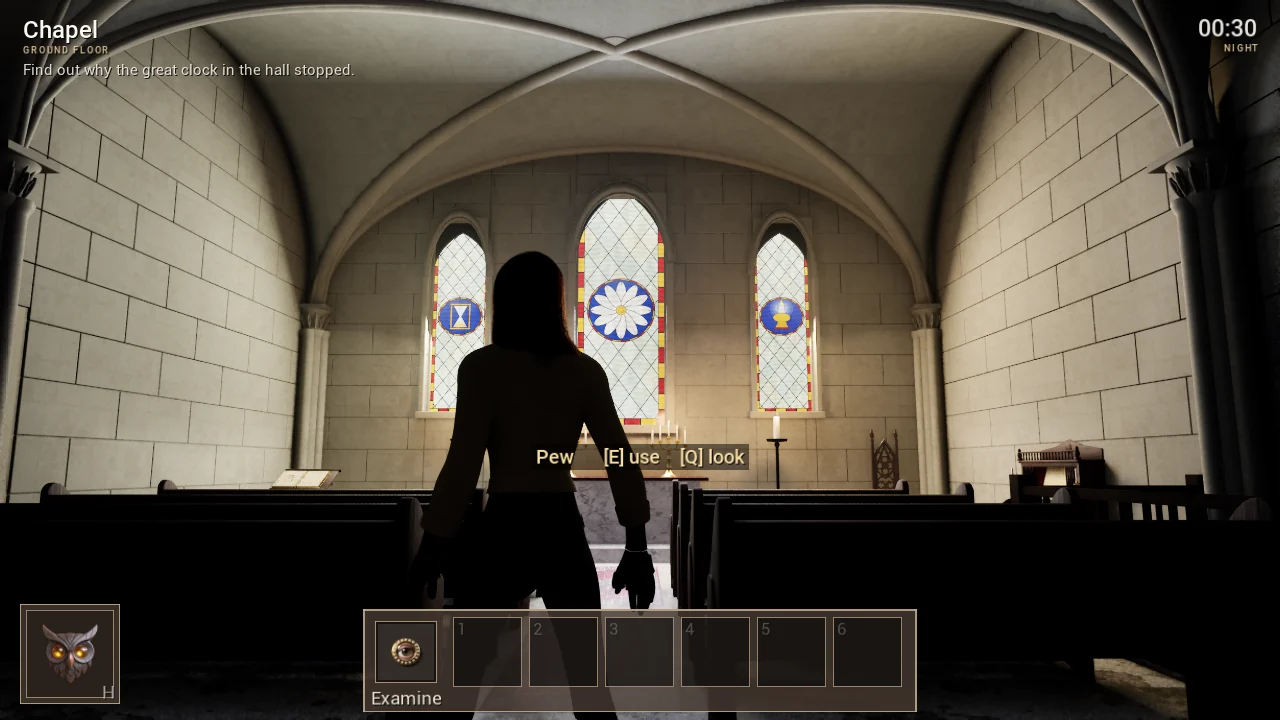
The family Bible on the chapel lectern opens in a close-up: the board and the leaves turn on the spine until it falls open at the family register. The stained-glass windows glow with the daylight outside and go dark at night, and the altar candles relight once you have left the room.
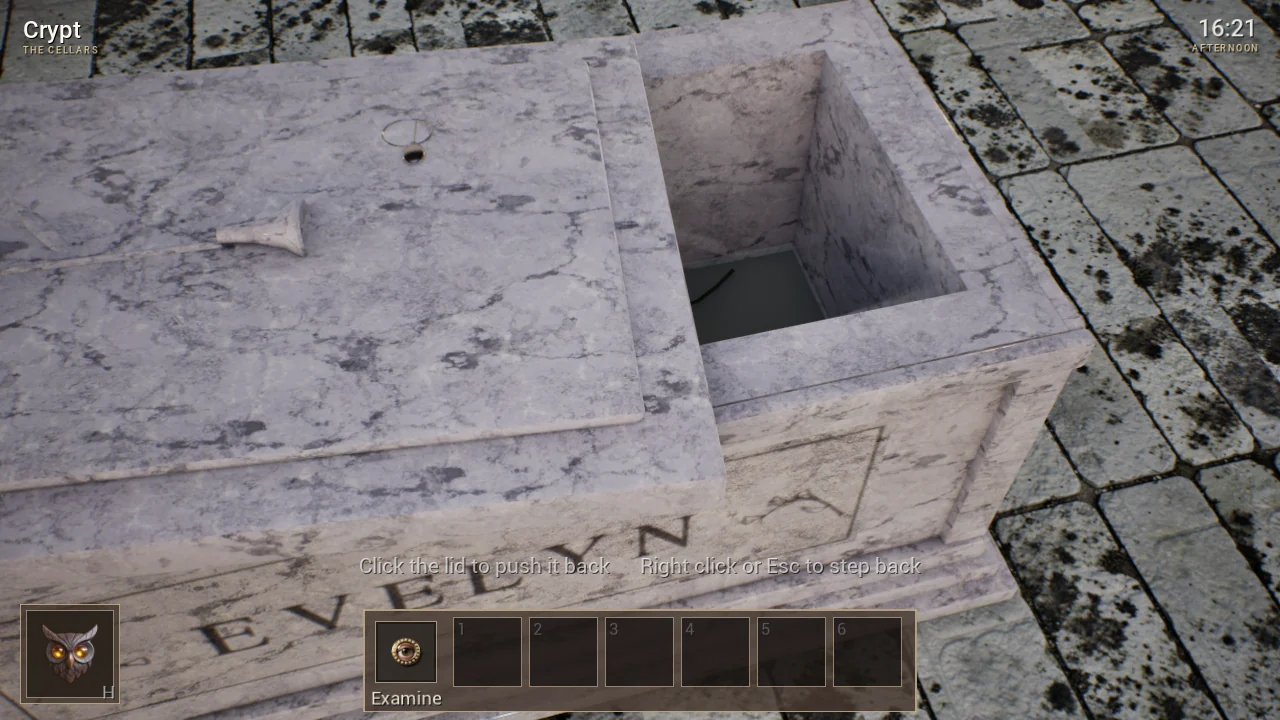
In the crypt, the lid of a marble tomb can be pushed aside, and water drips from the vault into a puddle, rippling with every drop.
The nursery.
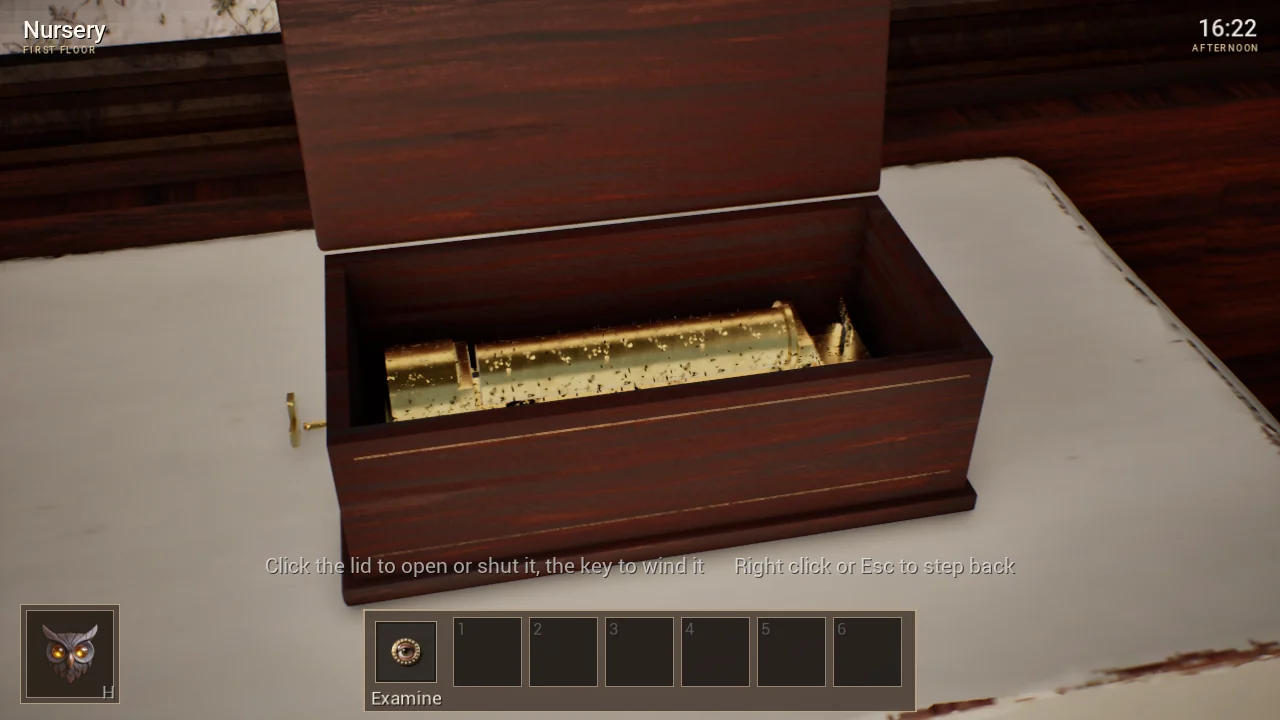
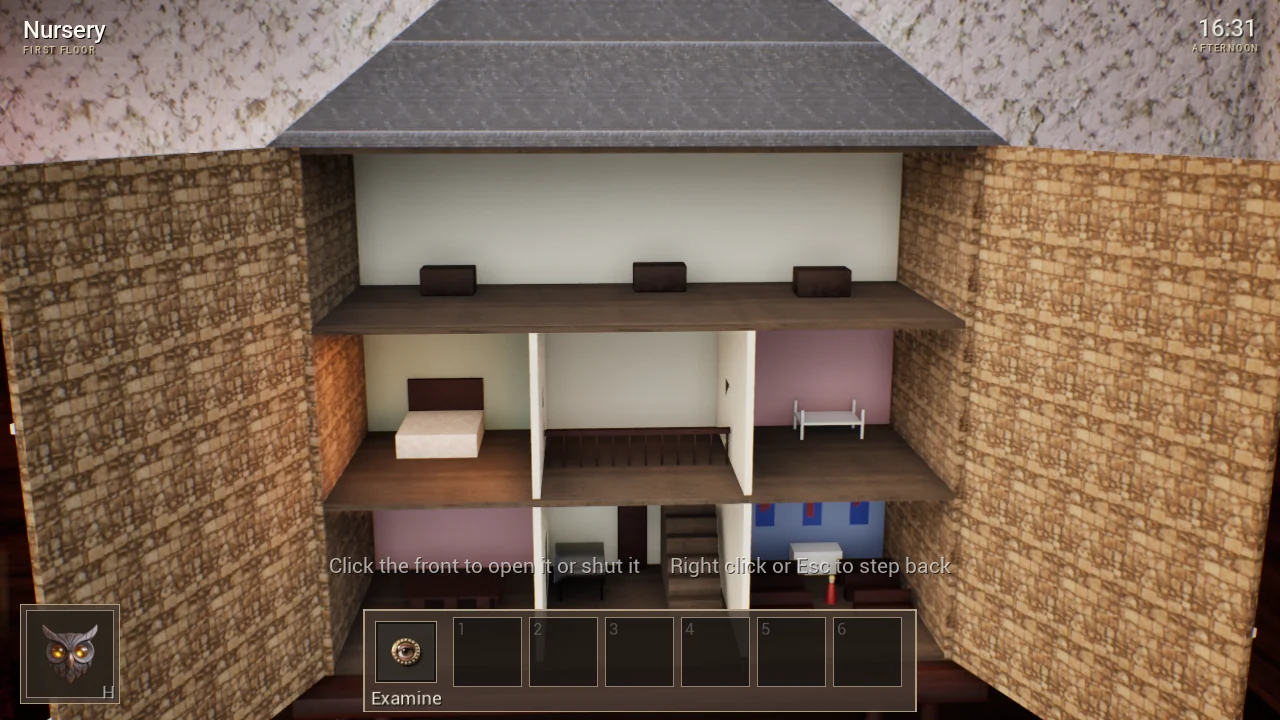
Lift the lid of the music box and wind its key: the pinned brass cylinder turns, the governor fan spins and it plays a lullaby. The front of the dollhouse swings open on furnished rooms on three floors. The rocking horse rocks and slowly settles, and the spinning top spins and then topples over.
The models are available.
We have released the working objects as six model packs for Blender, FBX and glTF (GLB), with every moving part a separate object on its own pivot: pianos and harmonium, clocks, chapel and crypt, nursery toys, parlour games, and kitchen and study. Each is US$9.99 on itch.io and submitted to Fab (US$9.99 Personal, US$29.99 Professional), where listings appear after Fab’s review. They are also submitted to BlendSwap, whose paid listings appear when its marketplace opens. See them all on 3D & Assets.
How these were made.
The working objects are modelled by Blender Python scripts written with an AI coding assistant, then checked in Blender and in the game. Their wood, marble, brass and fabric textures are CC0 photo scans (Poly Haven and ambientCG); dials, sheet music, pages and lettering are drawn by our own scripts. Elsewhere in the house, some furniture is still AI-generated (image-to-3D) or CC0 scanned from Poly Haven, and is being replaced room by room. Nora’s lines use a synthetic text-to-speech voice, the sounds and music are synthesised by our scripts or generated with AI models, and the behaviour of every object is C++ in Unreal Engine 5.8.
Where the game stands. Hollowmere is in development. Our builds are private test builds on our own computers; there is no public download, price, store page or release date for the game. The model packs below are separate asset releases, not the game.
Earlier: Hollowmere: building a haunted-house adventure. The game page: Hollowmere.