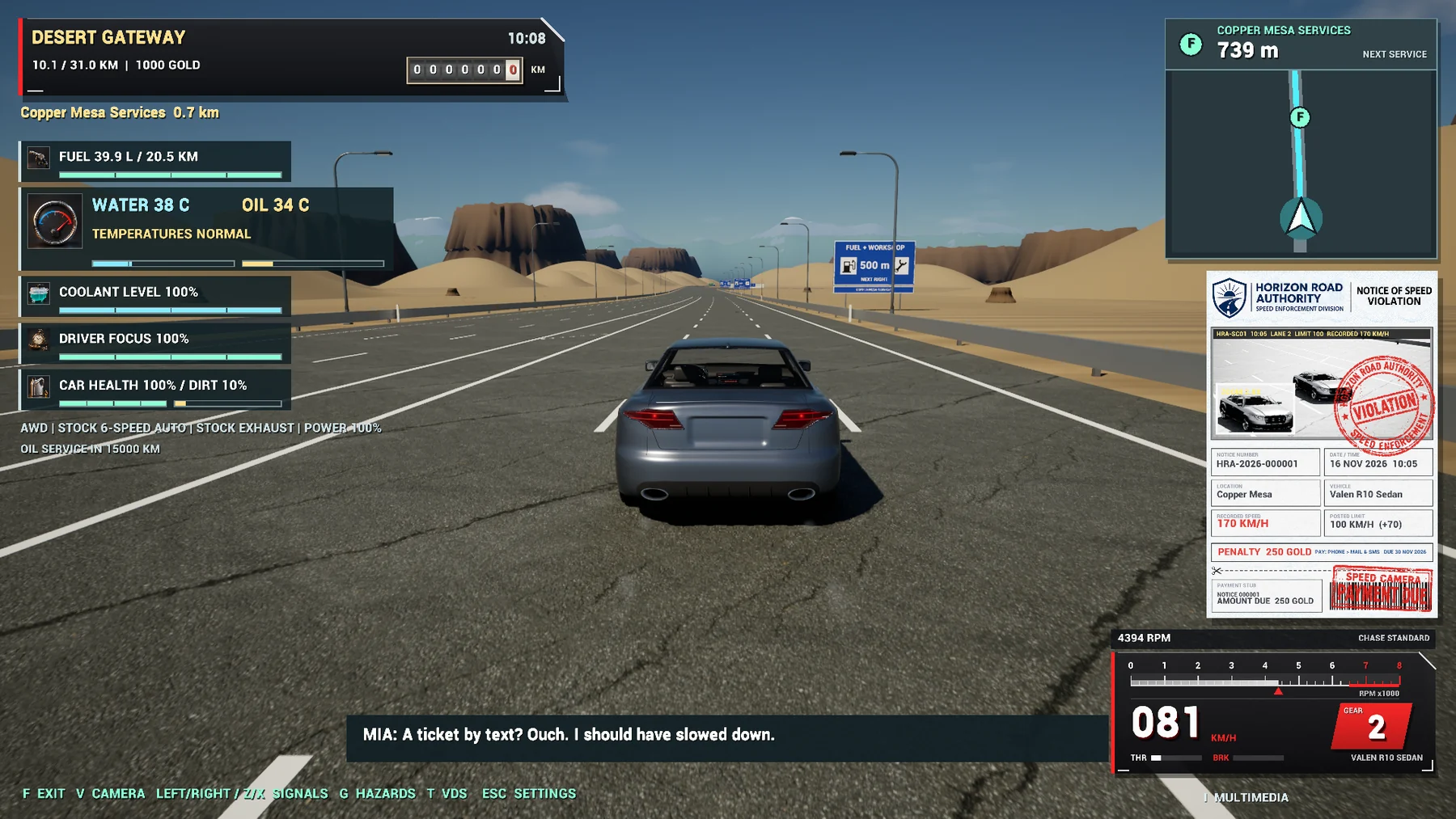
A ticket you can see.
Pass a speed camera too fast now and the screen flashes white with a shutter sound. A paper notice from the fictional Horizon Road Authority then slides in from the right for 7.5 seconds. It shows a photo of your car, taken by the game at that moment, along with the speed, limit and fine, and two red stamps. The fine itself still arrives on the phone as before.
Signal Master.
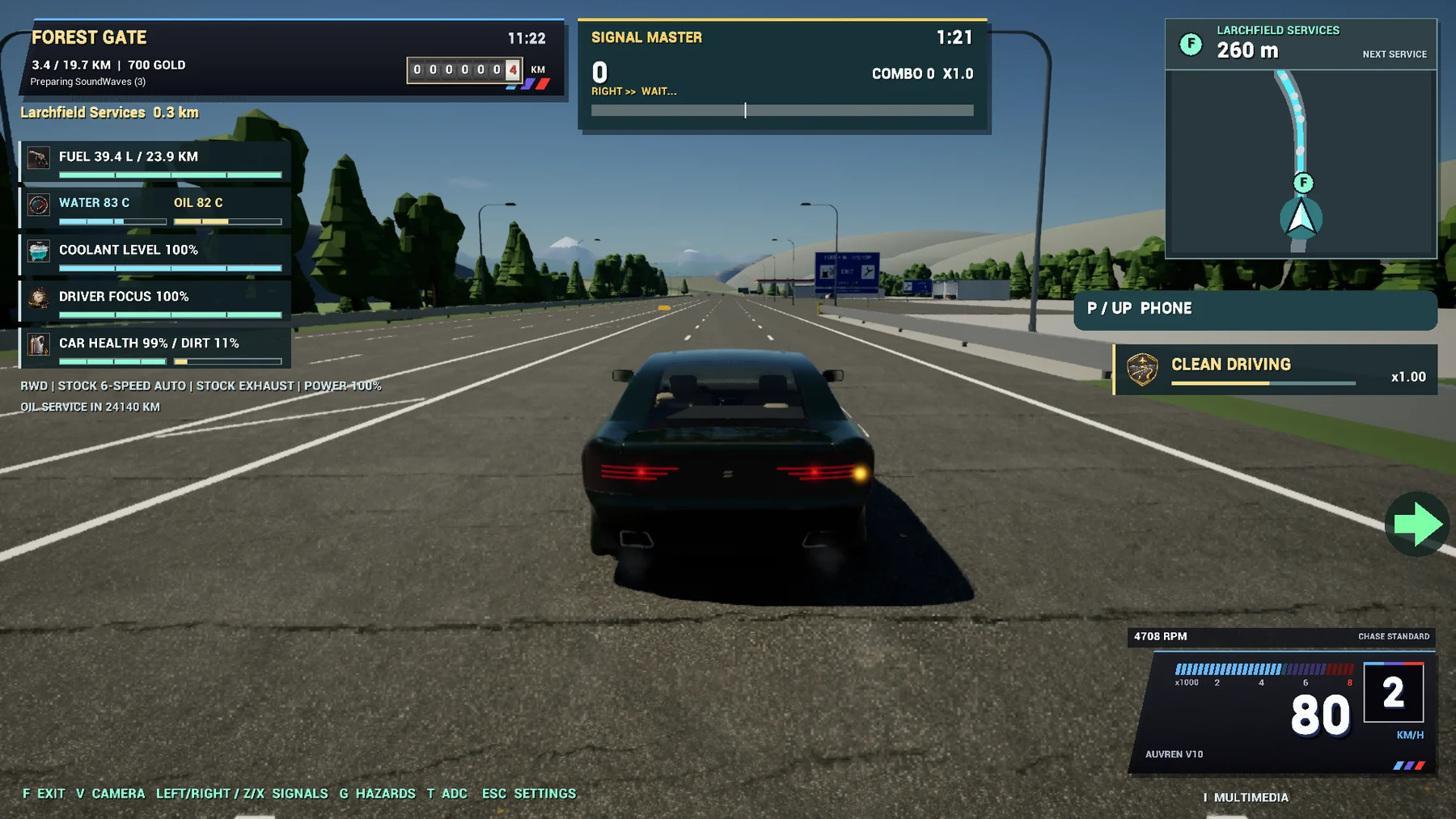
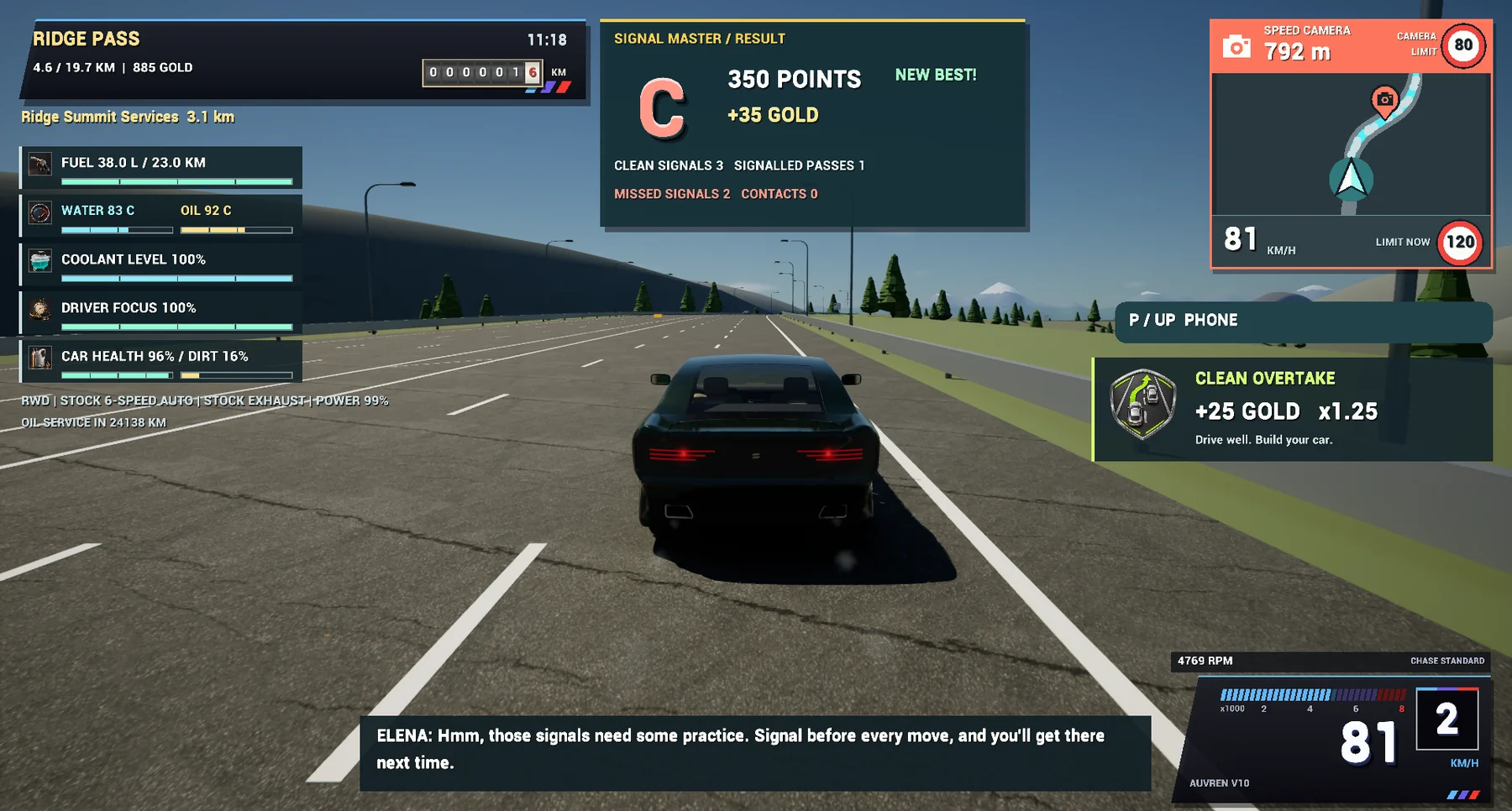
Once per chapter, on a busy three-lane stretch, Elena calls with a challenge. Press Y to play or N to skip. For 90 seconds you score points for every lane change you signal in good time and for every signalled overtake. Combos multiply the score. Forgetting to signal, signalling late, cutting in too sharply or touching another car costs points. At the end, a tenth of your score is paid in gold (up to 300), and your best score is saved. Extra traffic joins the road while the game runs.
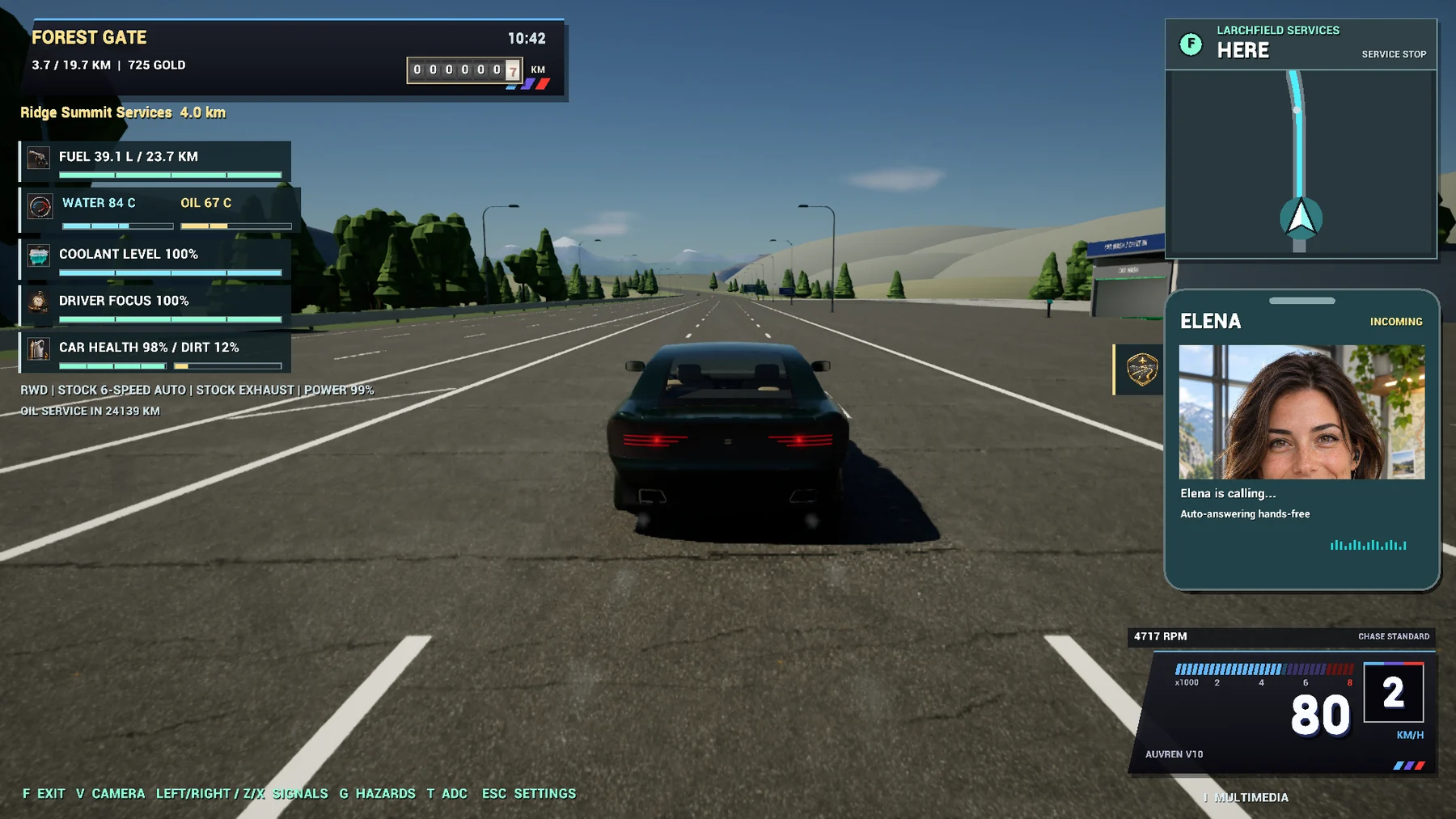
It has its own song, “Tick Tock, Turn It On”: a soft, lo-fi boy/girl duet about using your indicators. The lyrics were written for the game, and the music was generated with AI. You can hear it in the music collection.
Rafe: one press and you’re racing.
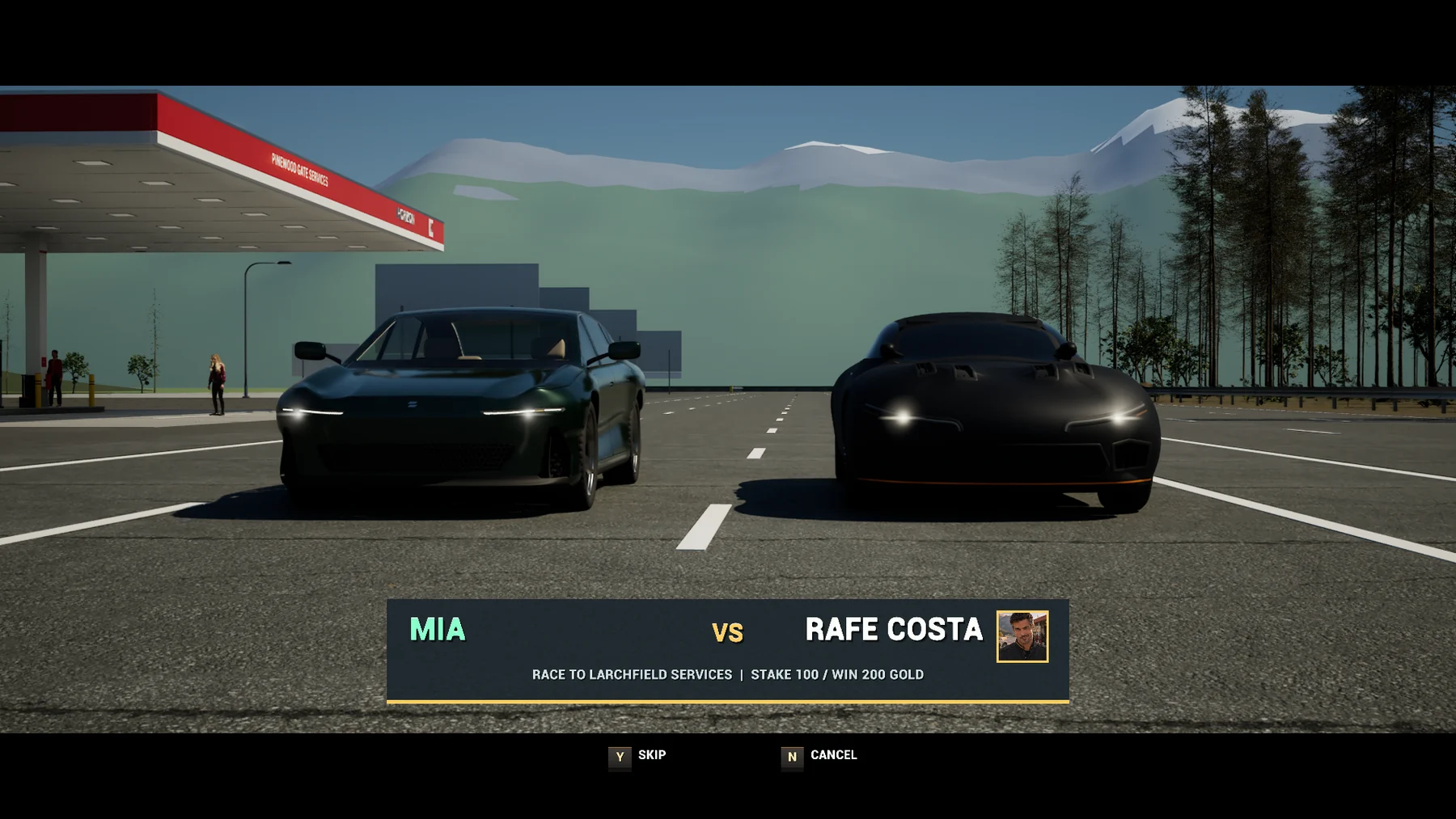
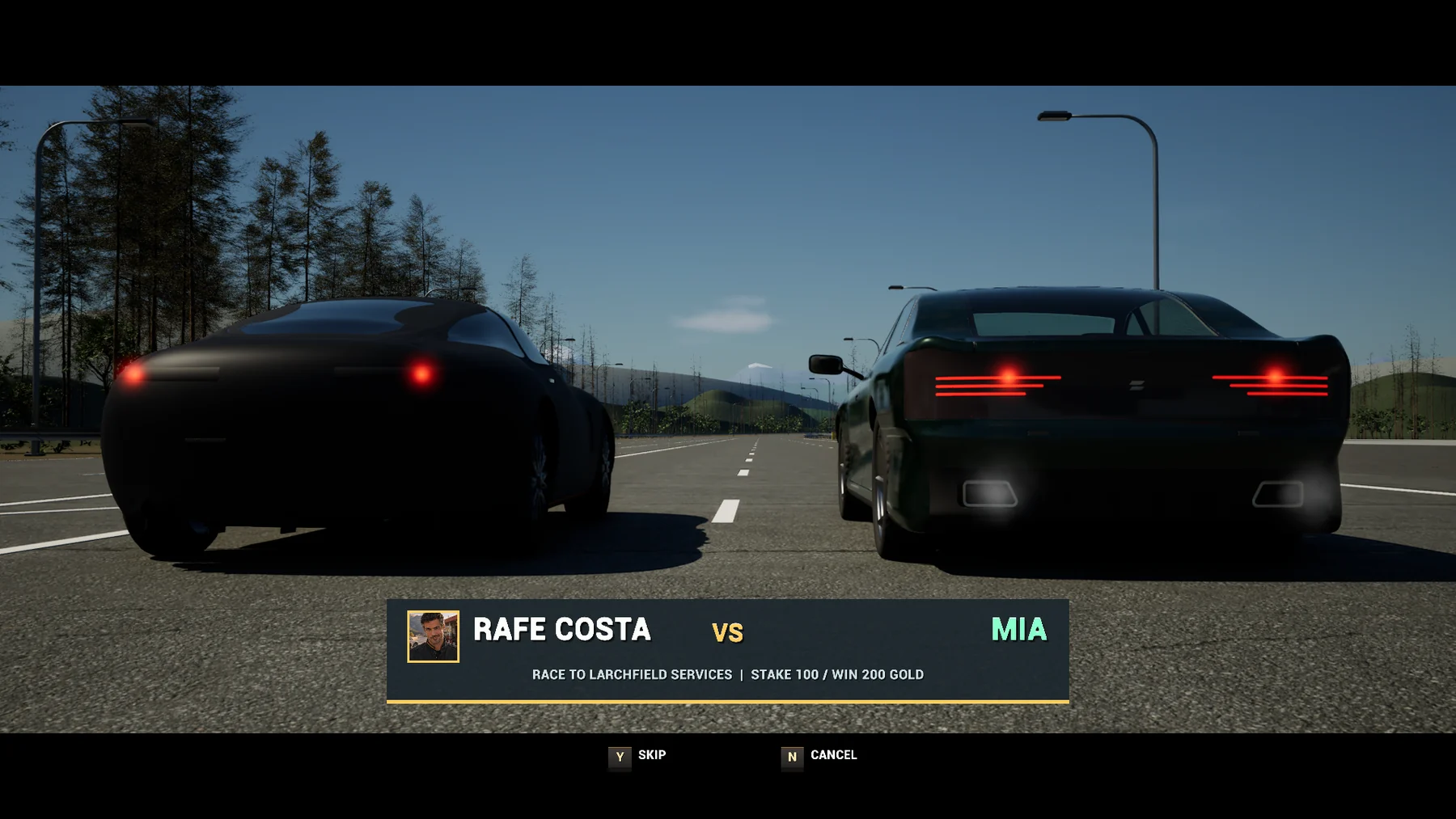
Accepting Rafe Costa’s race used to take two steps. Now one press of Y accepts and starts it. If you are on foot, your driver walks to the car and gets in. Then a short letterboxed lineup shows both cars while Rafe blips his engine, and the countdown begins. N still cancels at any time before GO, and the stake is only taken at GO.
Elena calls when you’re running dry.
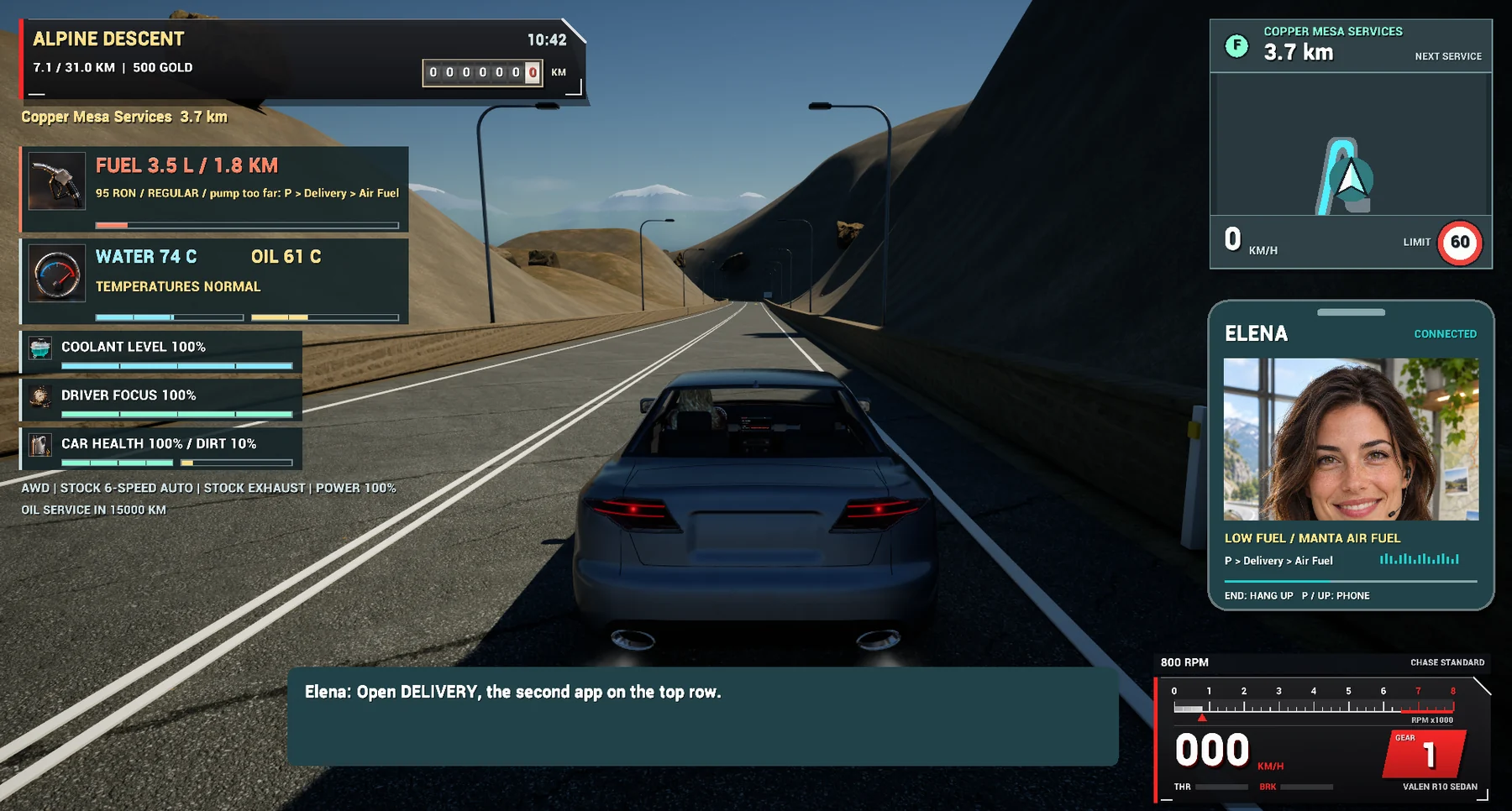
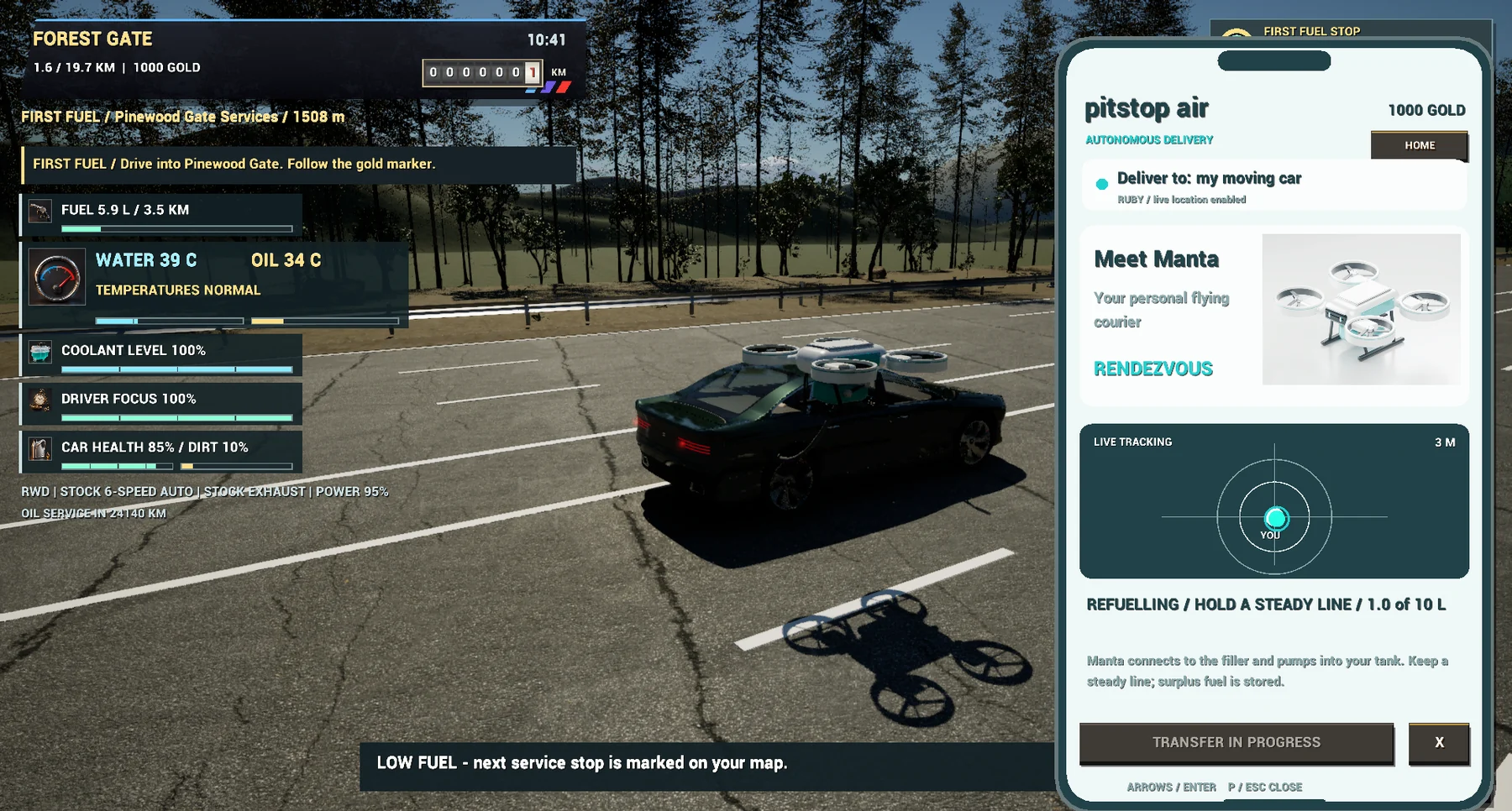
If you won’t reach the next pump, or the tank falls below 15% with no stop nearby, Elena now phones you. She explains, step by step, how to order fuel from the phone’s Delivery app. The Manta drone then refuels the car while you keep driving. She waits for a quiet moment: she won’t interrupt a race, a delivery, a stop or another call.
Music and engines.
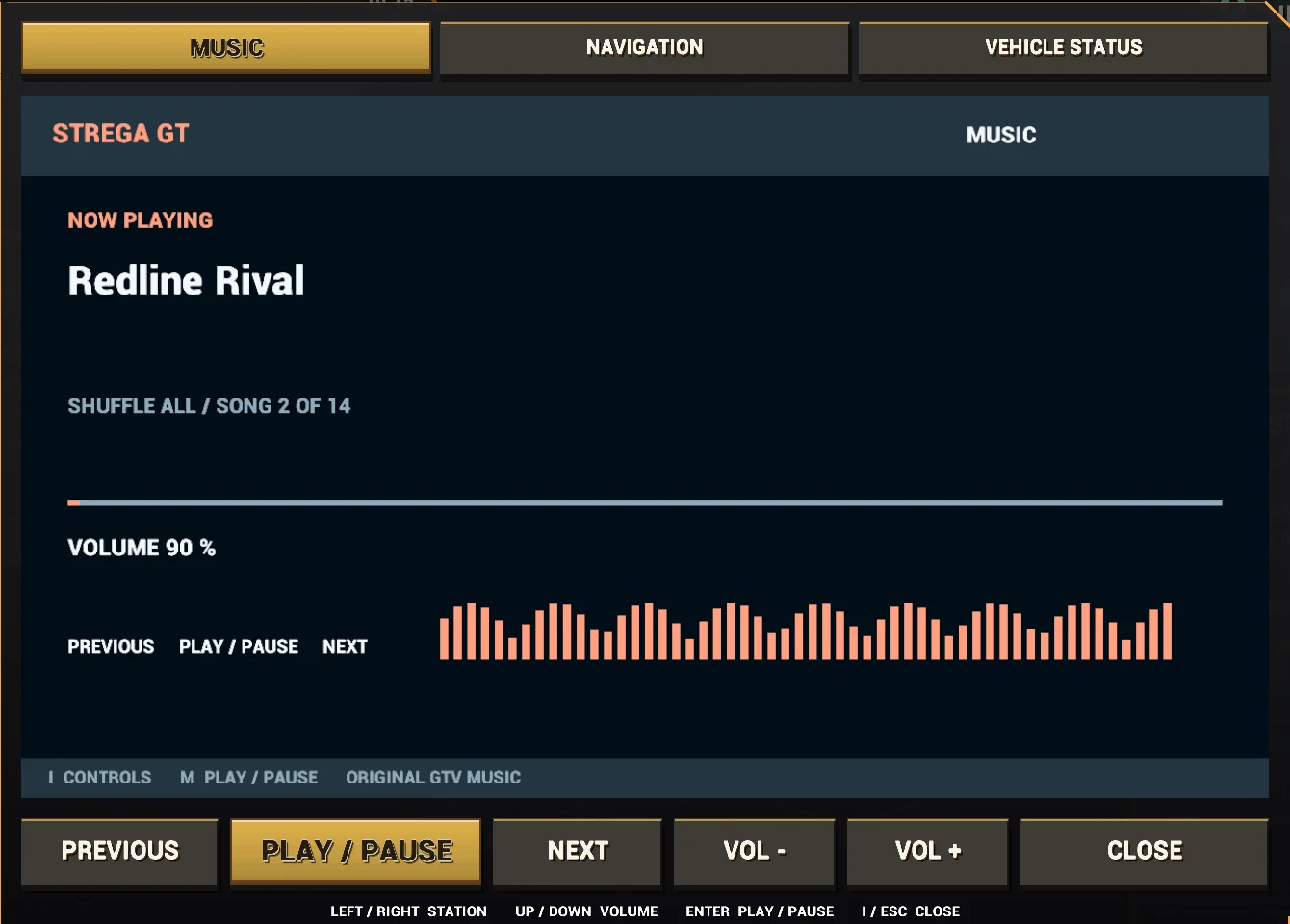
The radio no longer loops one song forever. Shuffle All, the new default, plays all 14 songs once per round in a random order, never the same song twice in a row. When you travel between maps the song carries on from where it was. The phone and the in-car screen can skip songs or switch back to repeating one track. Four of these songs are new on the site: Redline Rival, Nova’s Theme, Quarter Mile Heart and Tick Tock, Turn It On.
Engine sound moved to Unreal’s MetaSounds. Each car still uses its own three engine recordings, now in a single sound graph. It adds a small dip when you change gear under load, a muffled sound when you lift off, and a little extra volume under boost. Automated checks compared it with the old system: the pitch matches and there are no gaps or clicks between gears. Nobody has listened to it carefully yet, and a few cars still have open sound issues. The camera also no longer shakes at high revs.
How these were made.
The voices are synthetic text-to-speech voices; no real person’s voice is copied. The songs were generated with AI music models running on our own computer, and some interface pictures are AI-generated, as noted in the captions. All car, brand and place names in the game are fictional. On 16 November we replaced the last real-world system names in the cars and renamed the practice circuit Blackpine Circuit.
Where the game stands. GTV Horizon is in development. The builds mentioned here are private playtest builds for our own testing; there is no public download, price, store page or release date. A release-readiness review on 16 November found the game is not ready for Steam yet, and we are working through that list one stage at a time.
Previous: Horizon goes to private playtests.